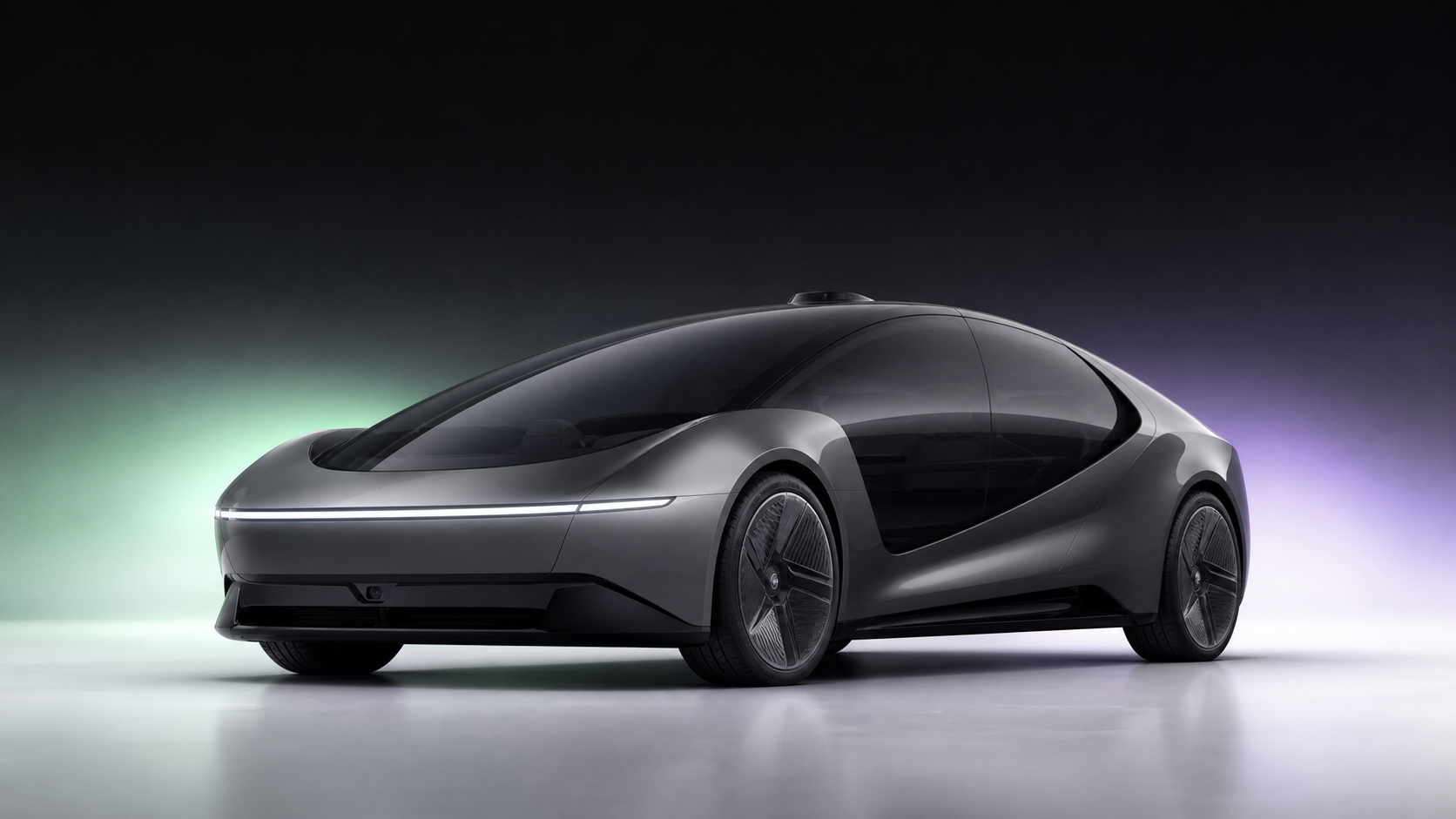
NOVA
Autonomous Journey Intelligence
An interaction system that helps occupants understand transitions, fallback, and recovery across L3–L4 automated journeys while keeping interface logic separate from vehicle-control capability.
DISPLAY CONTEXT
One cockpit. Three attention owners.
NOVA's hierarchy is grounded in automotive HMI and human-factors guidance rather than visual-gallery precedent. SAE J3016 defines the respective roles of the driving-automation system and the human user; ISO 15005 addresses dialogue management for systems used while driving; and NHTSA guidance limits visual-manual demand from secondary tasks. NOVA therefore keeps route and automation state in the primary field, lets safety transitions interrupt other content, and gives cabin media focus only when the journey state permits it.
REALMapbox Standard / OSM fallback
DERIVEDRoute and state composition
SIMConcept interaction specimen
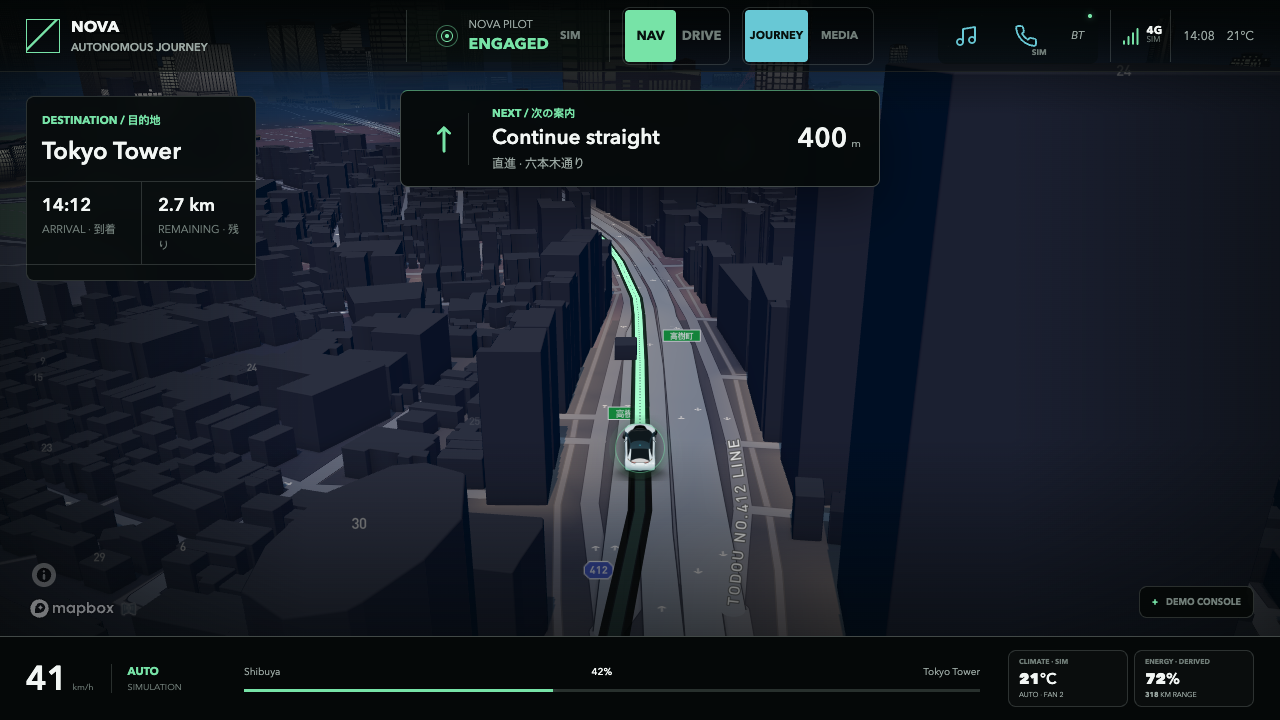
NAV / ROUTE CONFIDENCE
The map, maneuver, and arrival estimate own the primary glance.
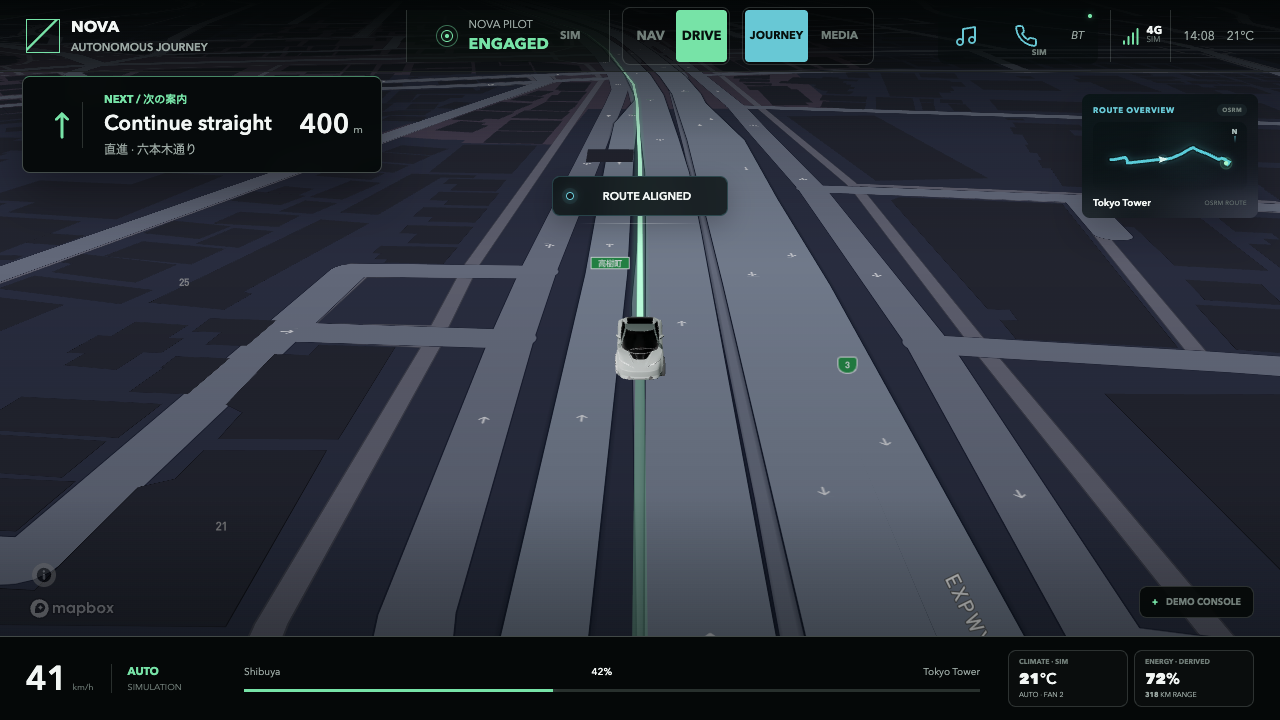
DRIVE / FORWARD UNDERSTANDING
The camera opens the road ahead while the shared route remains anchored.
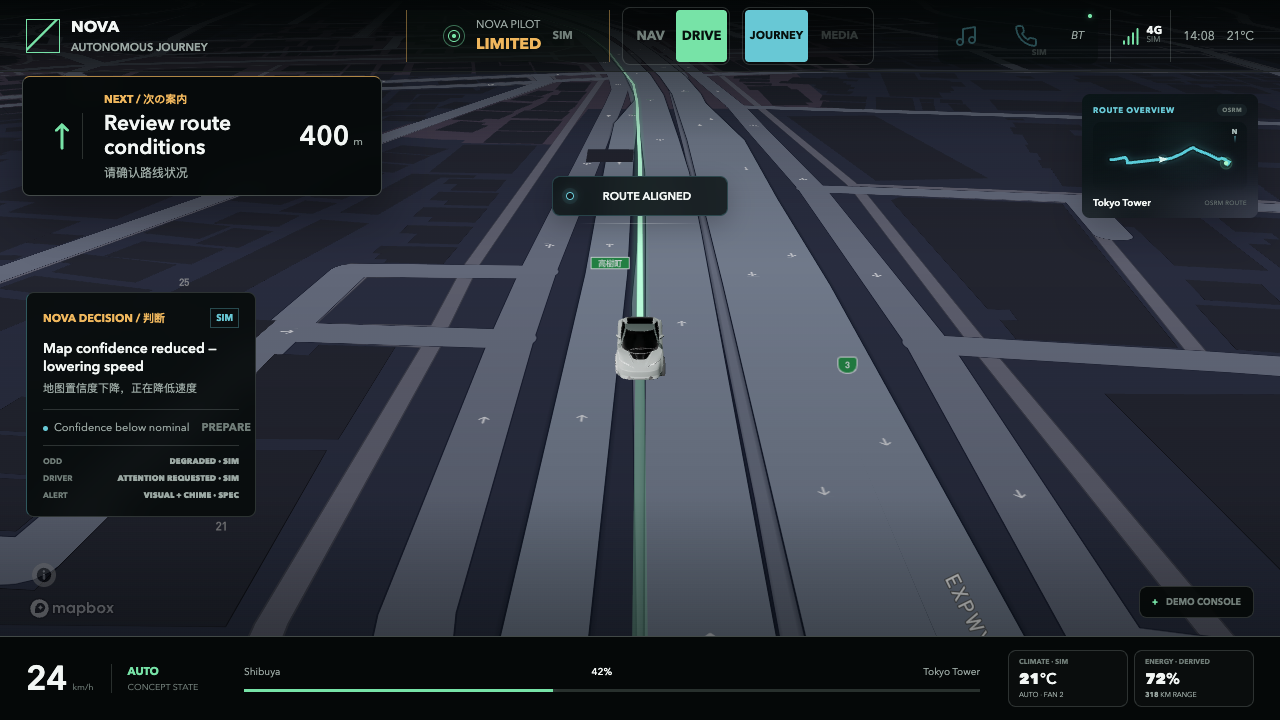
STATE / SAFETY PRIORITY
When confidence changes, system state interrupts content and restores action clarity.
PRODUCT THESIS
Autonomy should reduce uncertainty, not hide it.
NOVA treats the occupant as an informed participant. Route intent, system state, next action, and evidence provenance stay visible; takeover scenarios explicitly address the fallback-ready user without turning the cabin into a diagnostic dashboard.
- Format
- Independent end-to-end case study
- Role
- Product, HMI, interaction, prototype
- Platform
- Figma + Mapbox GL JS + MapLibre fallback + OSRM
- Output
- Figma system + working Web HMI
- Scope
- L3–L4 HMI / ODD-AWARE
- Status
- PORTFOLIO-READY / VALIDATION-PENDING
AUTOMATION POSITIONING
Designed for the transition, not a fictional Level 6.
NOVA is an HMI/HCI concept for L3–L4 transitions and constrained operational design domains (ODDs). It explores system readiness, route intent, uncertainty, fallback, minimal-risk behavior, takeover, arrival, and cabin-content interruption.
PROJECT CLAIML3–L4 HMIInteraction system—not autonomous-driving software
SAE J3016 defines Levels 0–5; there is no official Level 6. NOVA does not claim vehicle control, perception, sensor fusion, ODD certification, or production safety approval.
PRODUCT COVERAGE
A cockpit interaction system with explicit implementation boundaries.
Journey + cabin
Navigation, music, podcasts, stopped-vehicle video, phone, Bluetooth, climate, energy and a simulated voice assistant.
IMPLEMENTED · CONCEPTDriving state
Automation availability, route intent, driver-attention specimen, degradation, takeover and visual alert-channel semantics.
IMPLEMENTED · SIMODD + fallback
L3–L4 transition logic, ODD-boundary transfer, minimal-risk stop, recovery and arrival—without claiming vehicle control.
IMPLEMENTED · SPECIMENThree attention owners
HUD carries immediate action, the cluster preserves continuous driving state, and the center display explains journey context.
IMPLEMENTED · INTERACTIVENOVA PRODUCT LAYERHMI surfaces → state model → vehicle-service adapters
↕
EXTERNAL VEHICLE SYSTEMPerception · localization · planning · control · vehicle busPENDING / NOT IMPLEMENTED
The browser implementation is reviewable design evidence. Production migration targets AAOS, QNX, or Automotive Linux with OEM vehicle-service adapters; no production operating system or safety stack is connected.
RESEARCH BOUNDARY
Evidence before spectacle.
Geographic basemap
Mapbox Standard is primary; OpenStreetMap-derived OpenFreeMap tiles are the no-token MapLibre fallback.
Stored route
OSRM route geometry and maneuver sequence.
Route presentation
The stored OSRM route is re-anchored to the interpolated ego position for continuous guidance.
Ego vehicle marker
A de-branded Khronos-derived GLB demonstrates spatial ownership; it is not a perception or lane-localization output.
No claim of real sensor fusion, certified HD maps, production safety, or completed human validation.
FROM AJ TO NOVA
A screen concept became a product system.
AJNOVA
Static visual proposalFive connected journeys + four exception branches
Illustrative mapReal vector basemap + stored route
Unstated system confidenceExplicit autonomy state and recovery semantics
No implementation contractFreshness, fallback, provenance, and native direction
JOURNEY ARCHITECTURE
Five tasks. One continuous trust model.
- J1Plan and confirmAVAILABLE
- J2Enter autonomousENGAGED
- J3Navigate and understandNAV / DRIVE
- J4Uncertainty and fallbackLIMITED → STOP → RECOVERY
- J5Arrive and hand offARRIVAL
- B3ODD boundary transferODD EXIT → TAKEOVER / MINIMAL RISK
SIGNATURE INTERACTION
NAV ↔ DRIVE
NAV supports route planning and arrival confidence. DRIVE opens the forward field, lowers visual density, grounds the ego vehicle, and keeps the same route and geographic world underneath the camera change. The view switch alters information ownership, not just zoom.
Live prototype · use the NAV / DRIVE control
CONNECTED CABIN
The phone starts the journey. The vehicle carries it forward.
NOVA treats phone navigation as evidence of continuity needs rather than user failure. A simulated route handoff preserves intent; music, podcasts, and passenger video become primary only during permitted autonomy states; calls remain audio-first; and any AVAILABLE, LIMITED, MINIMAL_RISK, RECOVERY, TAKEOVER, or UNAVAILABLE state immediately restores journey information.
- 01Phone route detectedSIM INPUT
- 02Review and continue on NOVAUSER CONTROL
- 03Music, podcasts, video, and calls retain route contextENGAGED / ODD
- 04Safety state interrupts cabin contentSTATE PRIORITY
Phone, contact, media, and passenger-video services are simulated interaction specimens; no CarPlay, Android Auto, telephony, account, or streaming API is connected.
Live prototype · switch MUSIC / PODCASTS / VIDEO; use Demo Console to inject phone route, call, and safety states
PRODUCTION SCENES
One route, three levels of explanation.
Runtime captures use a real geographic basemap and stored route; the route guide and ego vehicle presentation are derived demonstration layers. No surrounding traffic or lane-level perception is claimed.
TRUST + UNCERTAINTY
State changes explain what changed and what happens next.
AVAILABLEENGAGEDODD EXITLIMITEDMINIMAL_RISKRECOVERYARRIVAL
Color never carries meaning alone. State name, behavior, health, action, route status, and data provenance change together.
TAKEOVER and UNAVAILABLE remain explicit exception states instead of being hidden inside a generic warning.
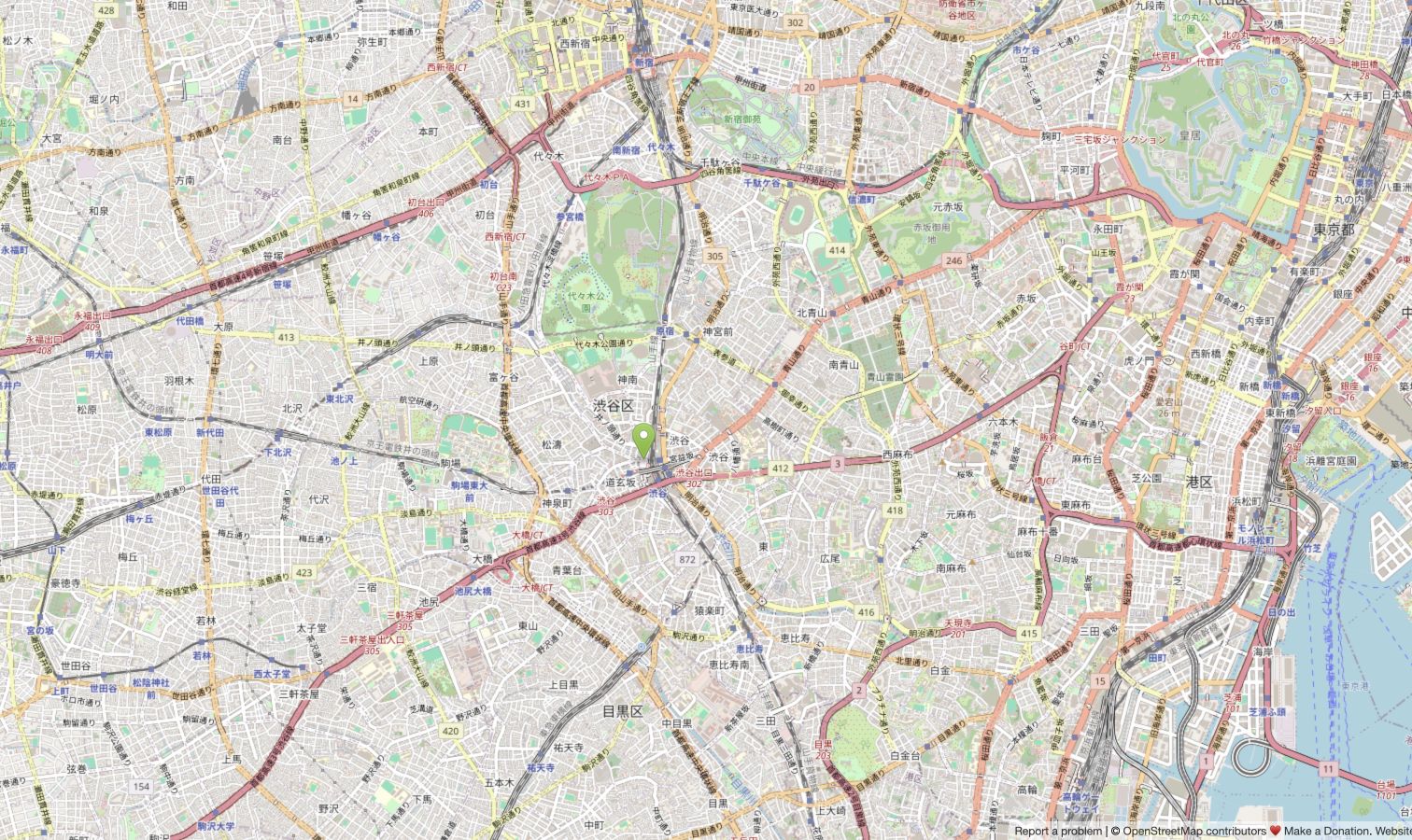
MAP + DATA ARCHITECTURE
Real context, explicit uncertainty.
- Mapbox GL JSPrimary Web renderer; MapLibre fallback
- OpenFreeMap / OSMVector context and buildings
- OSRMStored Tokyo route
- SIMEgo presentation and exception injection
GLOBAL READINESS
A regional adapter model, not decorative localization.
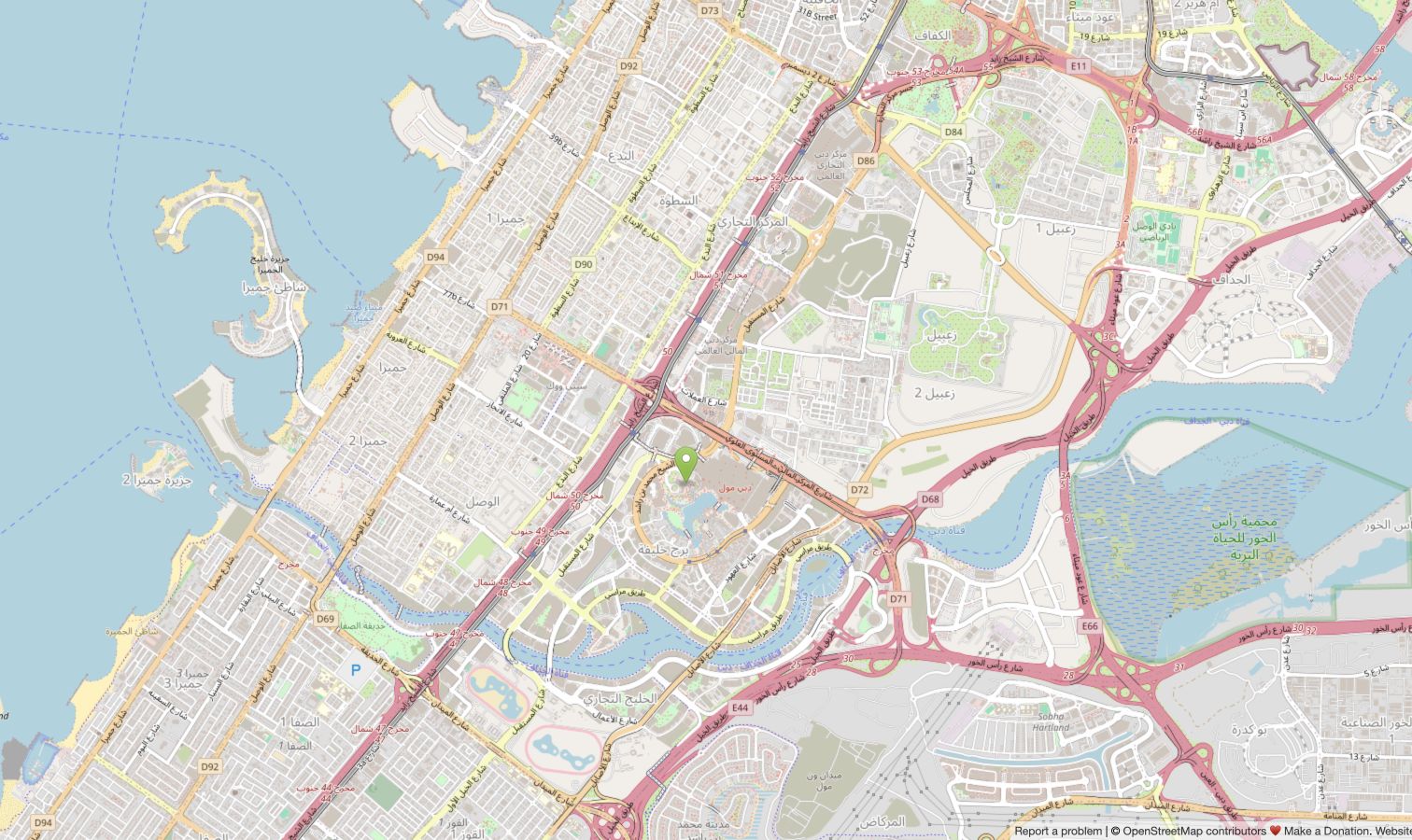
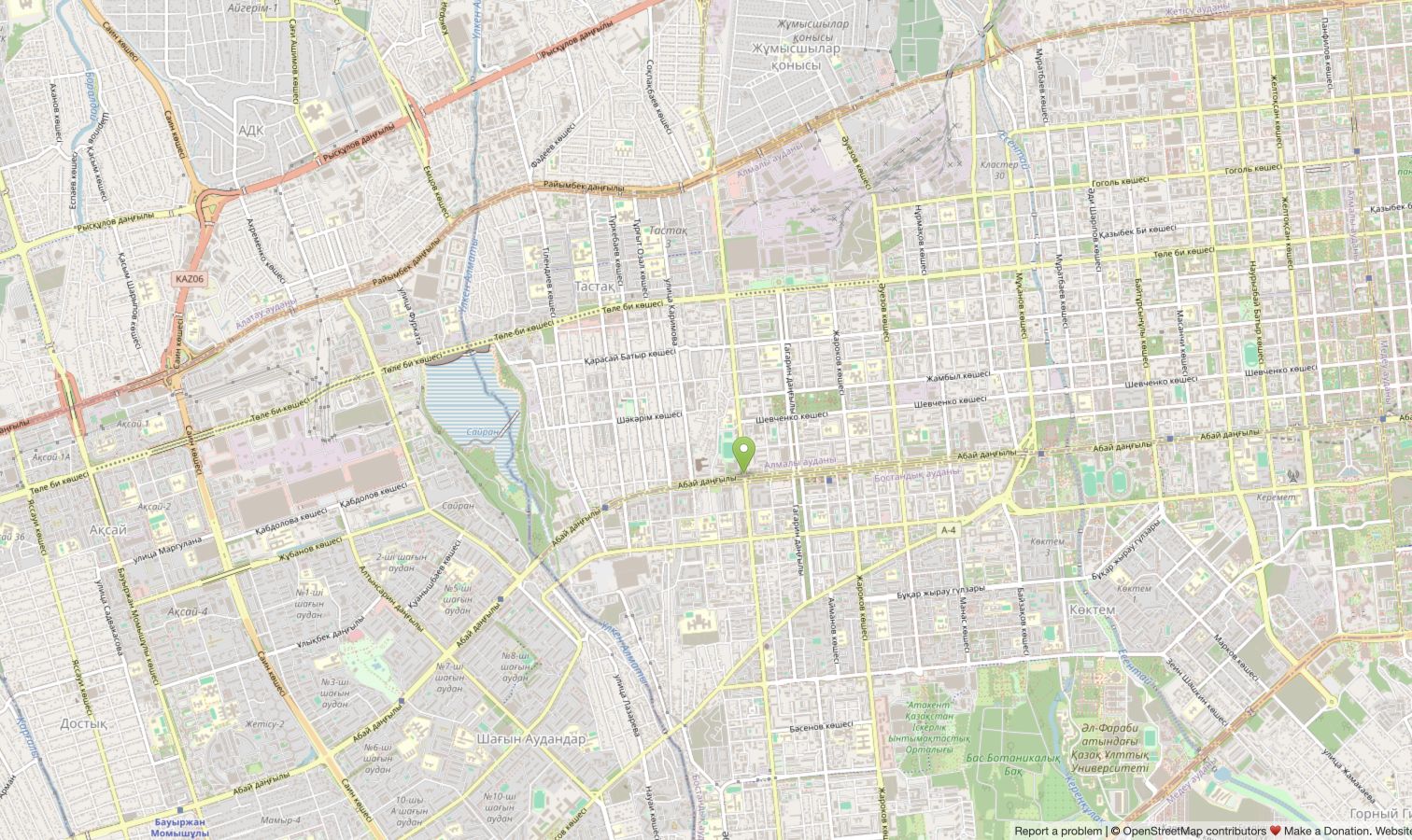
Arabic typography, regional providers, privacy, and data residency require local validation before production.
DESIGN SYSTEM
Semantics scale further than style.
NOMINAL#77E3A7
DERIVED#68C8D5
LIMITED#F0B75D
CRITICAL#FF6B5E
UNAVAILABLE#A6ADA9
Figma contains 12 populated pages, 34 component artifacts, 87 instances, 15 production/context screens, and 22 live prototype reactions.
WORKING IMPLEMENTATION
The prototype makes design claims inspectable.
24 Hzpresentation cap
5 Hzcontext LOD task
43OSM context nodes
7contrast pairs ≥ 4.5:1
These measurements are browser-session evidence, not target-hardware performance guarantees.
OUTCOME + REFLECTION
A portfolio case built on explicit product decisions.
NOVA evolved an early visual exercise into a connected product model, a production-oriented Figma system, an explicit data contract, and a working spatial interface. Its strongest result is the alignment between trust language, map evidence, interaction states, and implementation boundaries—not a futuristic surface alone.