
I think the person who “likes” to move in the world in the world is nomads.
我想这个世界上最“喜欢”搬家的人也就是游牧民族了。
We rely on grasslands, live by water and grass, and make a living by herding cattle and sheep. Wherever we nomadic, we will move our houses! Due to the need to move frequently, the house must be a movable house that can be moved at will.
我们依靠草原,逐水草而居,以放牧牛羊为生的民族,游牧到哪里, 就把住房搬到哪里!由于需要频繁地搬家, 住房就必须是能够随意移动的活动房屋。
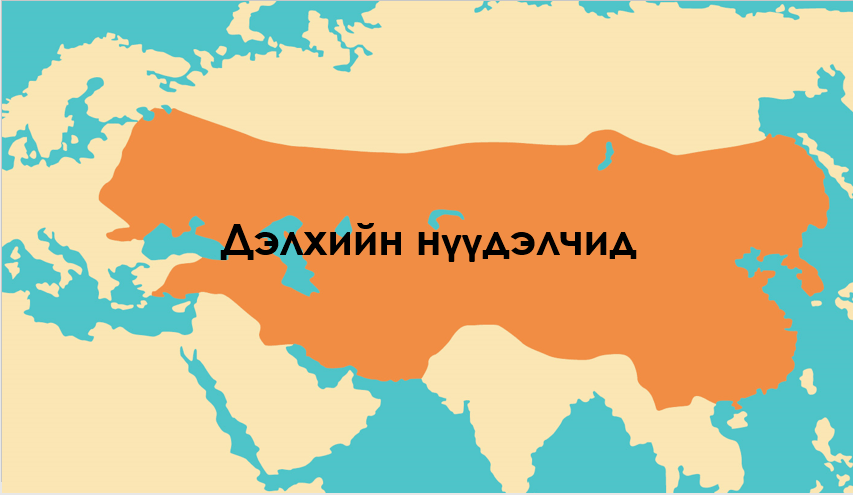
There is a kind of ethnic group in the world that lives on grasslands to survive by herding cattle and sheep; but they have to move frequently due to the restrictions of natural resources, thus giving birth to their “moving castles”. —Jorgutyn ALTANKHUU
Let’s talk about people before talking about architecture, so we need to simply know what nomads are? Which people in the world belong to the category of nomads?
在聊建筑之前让我们先聊聊人,所以我们要简单的知道什么是游牧民族? 世界上都有哪些人群属于游牧民族的范畴里?
Nomadism is the earliest form of human society, mainly hunter-gatherer and herding livestock. And behind this is the scarcity of natural resources, which makes nomads move according to the availability of resources. In ancient times, there were many different nomads, after the emergence of agriculture, nomads gradually settled, with the development of society, the number of nomads continues to decrease, after entering the industrial society is more rare, so some peoples in such a long history or integrated into other nationalities, the other part of the formation of a relatively independent, and strong national system based on the forest of the world’s nations.
游牧是最早的人类社会形式,主要为狩猎采集、牧养牲畜。而其背后支持游牧行为的正是自然资源稀缺程度,使游牧民族根据资源的可用性而移动。在古代,有很多不同的游牧民族,在农业产生之后,游牧民族逐渐定居下来,随着社会发展,游牧民族的数量不断减少,进入工业社会之后则更加罕见,因此一些民族在这样的历史长河中消逝或者是融入其他民族,另外的一部分则形成了相对独立,且强大民族体系立足于世界民族之林。
Semitic nomads
1 Semitic nomads
闪米特游牧民族
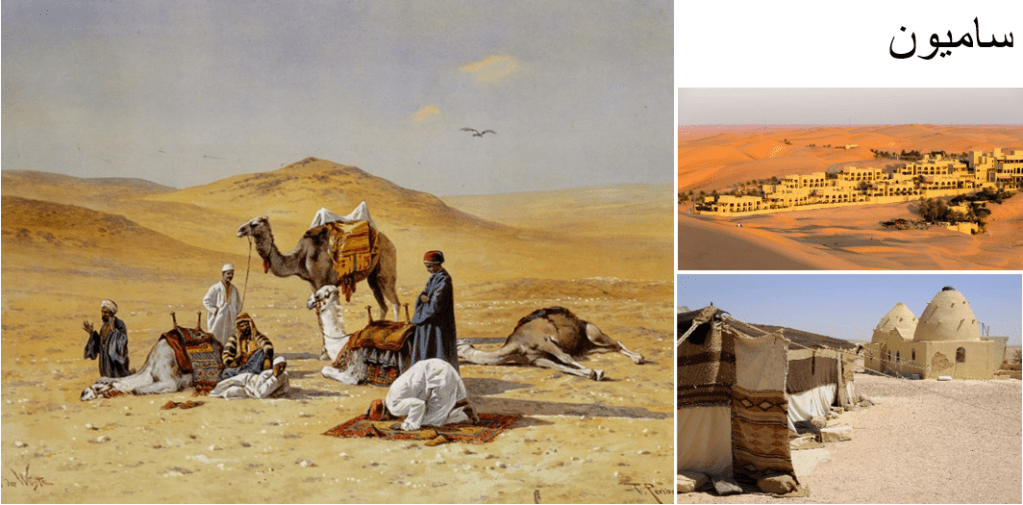
The Semitic nomadic people had established the ancient Babylonian kingdom, the Carthaginian Empire, the Arabian Empire and other countries. The Arabian architecture is often thought of as being influenced by the Islamic religion, but in ancient times, in addition to the enormous size and scale of the religious buildings, there were more earthy forms of housing and Bedouin tents that were extremely friendly to the people. Arabs, Jews and Syrians are all Semites. Most of the people living in West Asia and North Africa today are descendants of the Arabized ancient Semites.
闪族系的游牧民族,曾建立过古巴比伦王国、迦太基帝国、阿拉伯帝国等国家。主要居住在西亚和北非地区,提到阿拉伯往往想到的是受伊斯兰宗教所影响而产生的建筑,然而在古代除了宗教建筑巨大的体量和尺度外更多的则是极其亲民的土质形式住宅和贝都因人的帐篷。阿拉伯人、犹太人及叙利亚人都是闪米特人。今天生活在西亚北非的大部份居民,也正是阿拉伯化的古代闪米特人的后裔。

Among these religious buildings is a typical one, the Hagia Sophia, which was originally the Patriarch of the Orthodox Church (Catholic Church), Basilica, and was destroyed and rebuilt after many battles. It was destroyed and rebuilt, but the Ottoman Turks made it a mosque for a time. After it became a mosque, some of the Christian paintings were covered, and later some Islamic architectural forms were gradually added, such as the Mihrab, the Minbair and the four outside houses of worship. Called also as the minaret, it is a more typical tower form in Arab Islamic architecture.
在这些宗教建筑中有一个较为典型的建筑——圣索菲亚大教堂起初为正教会(天主教会)牧首巴西利卡,曾经过多次战火的洗礼,被摧毁又被重建。却因奥斯曼土耳其人又使她一度成为清真寺。在成为清真寺后,掩盖了部分基督教画作,日后又逐渐加上了一些伊斯兰建筑形式,如米哈拉布、敏拜尔及外面的四座唤拜楼。唤拜楼又称作宣礼塔,是阿拉伯伊斯兰建筑中较为典型塔楼形式。
In addition, there is a place of world civilization, there is a “The Kaaba( ٱلْكَعْبَة )” in the city of Mecca, also known as the Kaaba, and the building around this Kaaba is the “Great Mosque of Mecca” is the world’s largest mosque.
另外有一个世界文明的地方,麦加城中有座“Kaaba ٱلْكَعْبَة”也称作卡巴天房,而围绕着这座卡巴天房的建筑就是“麦加大清真寺”是世界最大的清真寺。
Aryan
2 Turkicized Aryan nomads
突厥化的雅利安游牧民族
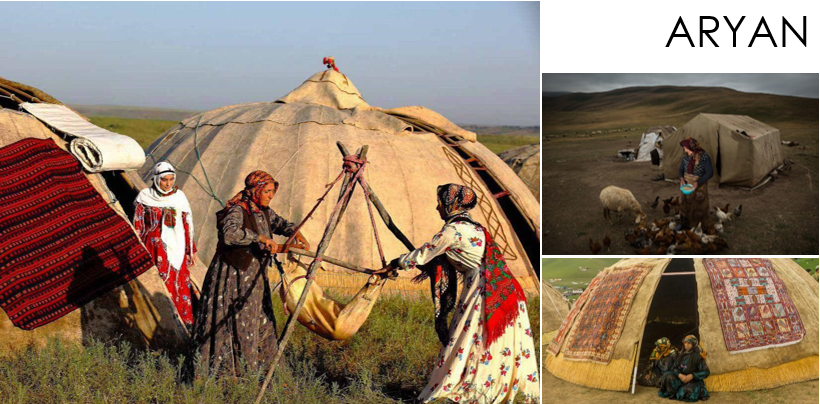
Why do we talk about Turkicized Aryans? The Aryans were an ancient nomadic people of the steppes of the southern Urals in Russia, who founded the Persian, Greek and Roman empires.
为什么要说突厥化的雅利安人呢? 雅利安人原是俄罗斯乌拉尔山脉南部草原上的一个古老游牧民族,他们曾经建立过波斯帝国、古希腊、古罗马帝国等。
Around 2000 B.C., they migrated to the plain between the Amu Darya and Syr Darya rivers in Central Asia, where they flourished and became the dominant group in Central Asia. Over time these Aryans gradually divided: one entered India, one entered Iran, and the other stayed in Central Asia, and then the Aryans gradually began to form different groups, namely the Aryans of India, the Persians of Western Iran, and the Turks of Eastern Iran (Central Asia).
在约公元前2000年左右,迁移至中亚的阿姆河和锡尔河之间的平原,并且在此繁衍生息成为了中亚的主导族群。随着时间的推移这些雅利安人逐渐分化:一支进入印度的雅利安人,一支进入伊朗,另一支留在了中亚,然后雅利安人开始逐渐形成了不同的族群,即印度的雅利安人,西伊朗的波斯人,东伊朗(中亚)的突厥人。
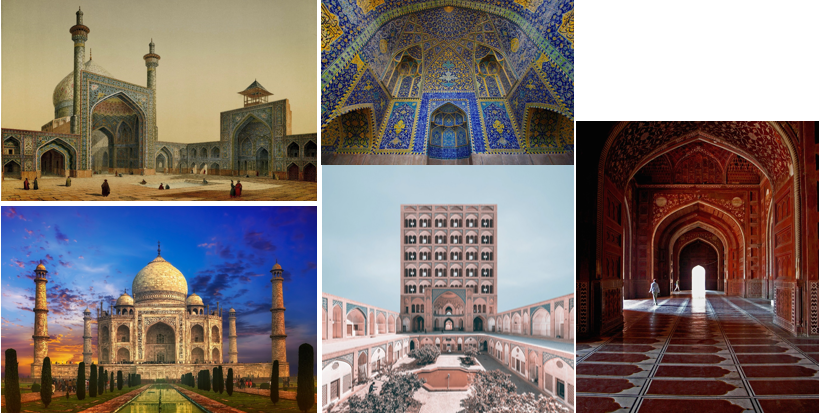
The history of Central Asia was originally the history of the Persian-speaking Aryans, part of the Persian Empire; with the rise of the Arab Empire, the faith of Central Asia changed – from Buddhism to Islam; in the 6th century AD Turkic peoples continued to move in from the East, and after only three centuries, the last Aryan dynasty, the Samanids, fell at the end of the 9th century. After the fall of the Aryan dynasty and the establishment of the Seljuk Empire at the end of the 9th century, the main ethnic group in Central Asia gradually changed from Aryans to Turks. At this point the Aryans completed their Turkicization!
中亚的历史,最初是说波斯语的雅利安人的历史,是波斯帝国的一部分;随着阿拉伯帝国的崛起,改变了中亚的信仰——由佛教变为伊斯兰教;在公元6世纪时突厥人不断从东方迁入,仅仅过了3个世纪之后,9世纪末最后的雅利安王朝萨曼王朝的灭亡,塞尔柱帝国建立,中亚的主体民族从雅利安人逐渐变为突厥人。到此雅利安人完成突厥化!
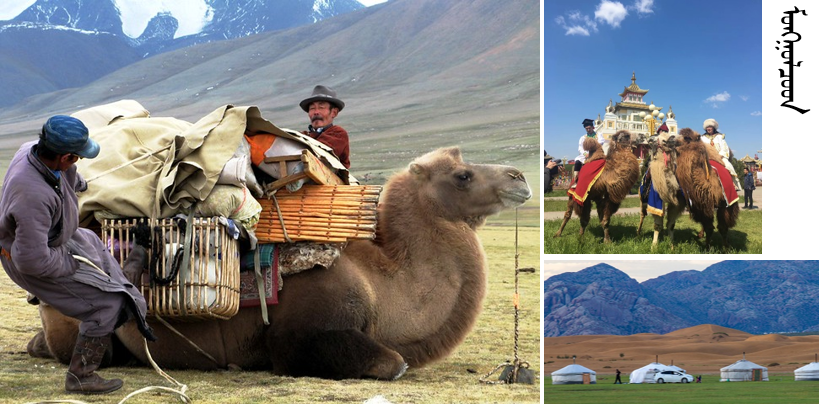
Mongol
3 Mongolian nomads
蒙古系游牧民族
Before returning to the theme of “Moving Castle”, let’s talk about the religious architecture of Mongolia under the influence of Buddhism.
以蒙古人为主体的民族曾经建立过匈奴帝国、蒙古帝国、奥斯曼帝国等,在回到主题“移动城堡”之前,让我们再来聊聊宗教建筑,佛教影响下的蒙古。
The picture below is Ulaanbaatar in 1911, Ulaanbaatar has 381 years of history and was built in 1639 as a place where Zhebzundamba Hutuktu, the largest living Buddha of Mongolian Khalkha, was stationed. Orgun was a mobile place and its location was not fixed and it was nomadic on the steppe. Therefore, Ulaanbaatar was a mobile city at that time and was renamed as Grand Kulun (Их Хүрээ) in 1906, which was the center of Khalkha Lamaism and the place where the princes and nobles lived, and Tsarist Russia and other countries also established their consulates and expatriate areas here.
下面这张图片是1911年的乌兰巴托,乌兰巴托有381年的历史,始建于1639年,是当时蒙古喀尔喀部最大的活佛哲布尊丹巴呼图克图驻锡地,时称“敖尔告”(Өргөө,宫殿、宫邸之意),但当时的敖尔告是移动场所,位置并不固定,在草原上游牧。所以当时的乌兰巴托是一座移动的城市,1906年改称大库伦(Их Хүрээ),是喀尔喀喇嘛教的中心和王公贵族居住的地方,沙皇俄国等国还在此设立了领事馆和侨民区域。
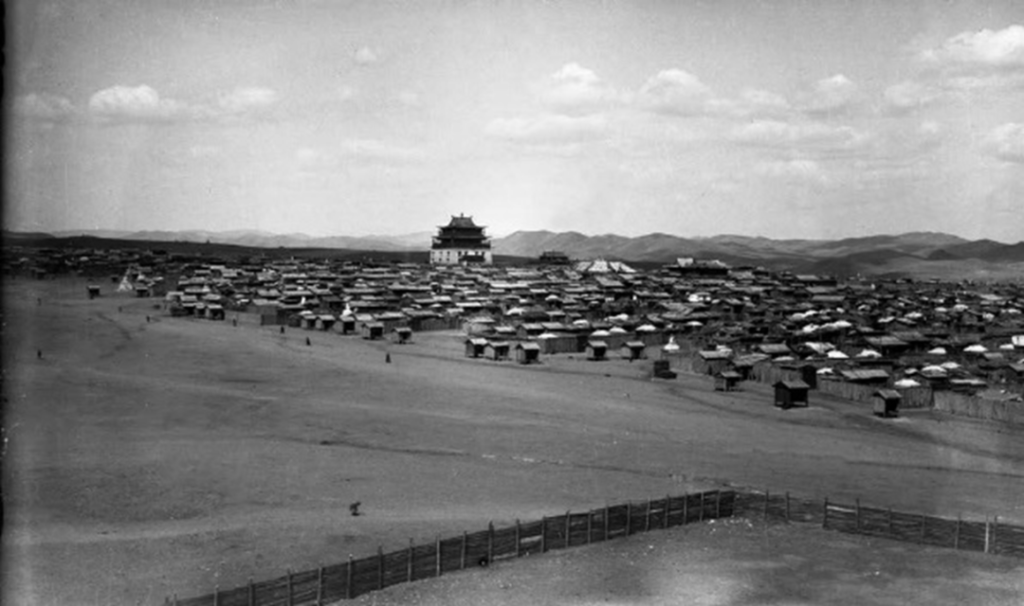
Ulaanbaatar 1991
At the end of 1911, the Eighth Zhebzundamba Bokdoggen declared the independence of Bokdokhanate (Outer Mongolia) and made himself emperor, which was renamed as “Kyoto Kulun” (Нийслэл Хүрээ), when the population of Kulun had reached about 60,000. Mongolian temples were formed at a certain time in history when the Mongolians switched from Shamanism to Buddhism, fusing Tibetan and Han Chinese skills. The following picture shows the appearance of several different forms of temples with some differences, usually with small stupas around the main building.
1911年末,八世哲布尊丹巴博克多格根宣布博克多汗国(外蒙古)独立,自立为皇帝,又改称“京都库伦”(Нийслэл Хүрээ),这时的库伦人口已经达到6万人左右。蒙古人在特定的历史时期由萨满教转向佛教,融合藏族以及汉族的技艺形成的蒙古式寺庙。下面这组图上是分别几种不同形式的寺庙外观上有一些不一样的地方,通常在主体建筑周围会有小型的佛塔。

These pagodas are also known as “lama pagodas” which are usually used to place the “relics” of the deceased monks, if anyone has been to Tibet, they may have seen more pagodas made of different materials along the way, such as mud pagodas, wooden pagodas, masonry pagodas, etc. The pagodas are differentiated by different class hierarchies and are generally composed of three parts: the base, the vase and the brake. The central part is the main function of the building is the center of the temple, usually this building is based on the “Mandala”, altar city(Mandala) according to the proportion and the depiction on the altar city. And Buddhist temples are mostly with heavy eaves hutted roof, gold and green tiles, red bricks and white walls and other main features.
这些个佛塔是塔婆式塔也可以称作为“喇嘛塔”通常用来放置供奉圆寂僧人的“舍利子”,如果有人去过西藏那么或许在沿途会见到比较多的不同材质的佛塔,有泥塔、木塔、砖石塔等是因不同阶层等级制度分化而来,一般由塔座、塔瓶和塔刹三部分构成。而正中部分则是具有主要功能的建筑也就是寺院的中心,通常这种建筑多是根据“坛城”,坛城按照比例及坛城上的描绘所建立而成。且佛寺多为重檐歇山顶、镶金青瓦、 红砖白墙等主要特征。
4 “The mobile castle of Herdsmen”
”牧人的移动城堡“
The Mongols were the main ethnic group that built the Hun Empire, the Mongol Empire and the Ottoman Empire.
以蒙古人为主体的民族曾经建立过匈奴帝国、蒙古帝国、奥斯曼帝国等。
Apart from religious buildings, the architecture of nomadic peoples was mainly temporary. Why did these peoples choose temporary buildings as their main architecture? I told you at the beginning of this article that the people who “like” to move the most in the world are the nomads, do we really like to move?
除了宗教建筑以外,游牧民族的建筑多以临时性的建筑“装置”为主。那么这些民族为什么选择临时建筑作为主要建筑呢?我在开篇的时候有跟大家说过这个世界上恐怕最“喜欢”搬家的民族就是游牧民族了,难道我们真的很喜欢搬家么?

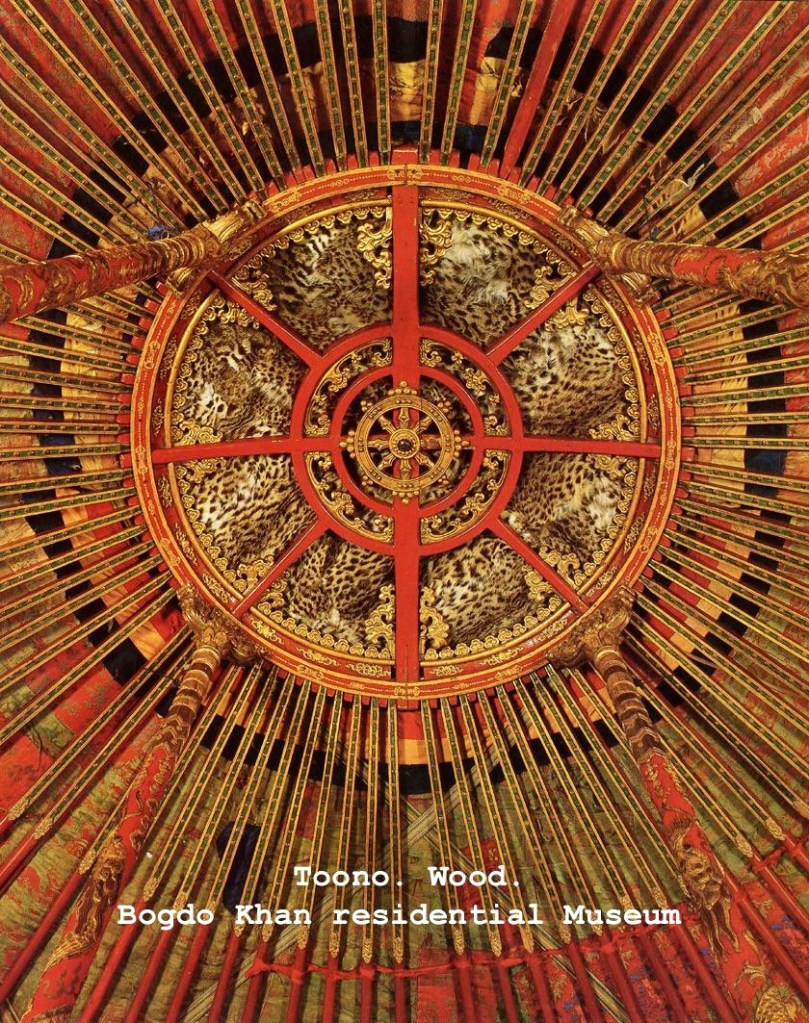
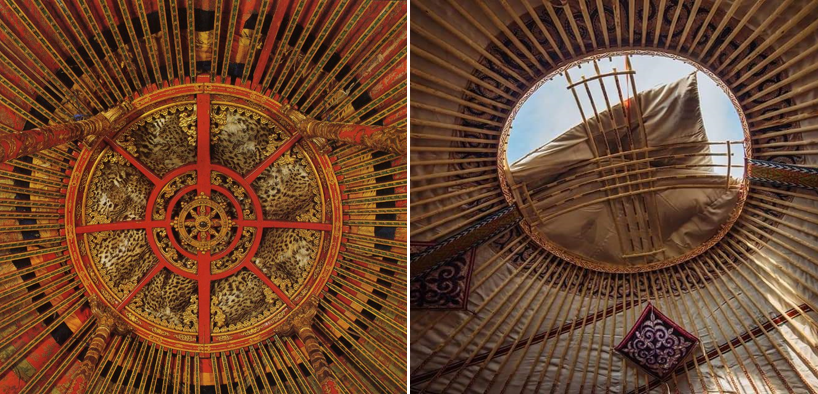
Yurt has appeared in human history more than 3000 years ago, is the ancient Mongolian umbrella tent, in our ancient history books is called “dome”. The interior skylight is decorated like a grassland version of the “algae well”.
蒙古包在在3000多年以前就已经出现在人类的历史上,是古代蒙古人的伞形帐幕,在我国古代史书中被称作“穹庐”。内部天窗的装饰,就像是草原版的“藻井”
Since the thirteenth century, Mongolians have believed in nature and respected the law of growth of all things. In the grassland, the herdsmen have developed a nomadic lifestyle to balance the grassland ecology according to the seasonal changes and to survive for a long time. In order to maintain the natural balance between grass and livestock, Mongolian herdsmen have to keep the grass and livestock in balance. Therefore, the Mongolian people have to move around the vast grasslands on a regular basis, and this has led to the creation of the “yurt”, a classic temporary structure.
十三世纪以来,蒙古族信仰自然,崇尚万物生长之规律。在草原上,牧民根据季节变迁,为了平衡草原生态环境,并长久的生存于此,从而衍生出已游牧为核心的生活方式。以维系“草”与“牲畜”的自然平衡。因此,蒙古族人往往需要按时令,在广袤的草原上四处游牧,因此衍生出了“蒙古包”这一经典的临时性构筑物。
This kind of dwelling is widely used by Mongolian, Kazakh and Kirghiz nomads in Central Asia, from the east to the Daxingan Mountains and the west to the Caspian Sea, and the small yurts are scattered like pearls in the high steppe. It is called “felt house” by nomads other than Mongols, and these nomads are usually of Turkic origin as well.
这种民居住宅以中亚蒙古人、哈萨克人、柯尔克孜等游牧民族中广泛使用,以中亚为核心东至大兴安岭西至里海沿岸,这小小的蒙古包就像珍珠一样散落在高山草原上的角角落落。除蒙古人外其他游牧民族称其为“毡房”,而这些游牧民族通常也是突厥系的游牧民族。
We all know the kiln cave in Shaanxi Province, the dry fence house in the southern Baiyue region, the Hakka tower and other forms of human habitation according to different regional culture and ideology to create a variety of different forms of architecture, I think this should be the basis and pillar of the origin and development of architecture to this day!
我们都知道陕西窑洞,南方百越地区的干栏式住宅,客家塔楼等人居形式根据不同的地域文化以及意识形态创造出多种多样形式各异的建筑,我想这应该就是建筑源起且发展至今的基础和支柱吧!
Торгуудын их нүүдэл (Монголын эмгэнэлт түүх) / TUUH.MN
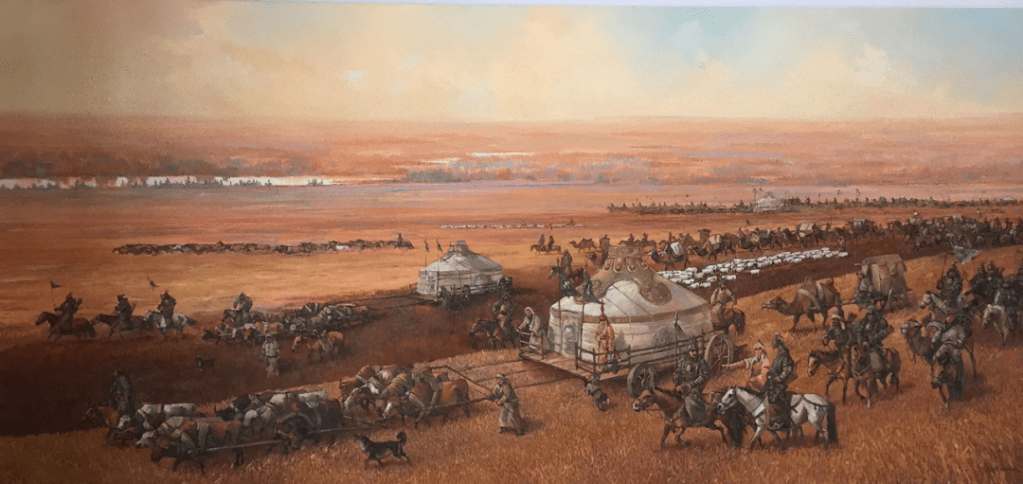
The name of this painting is “The Great Migration”, which depicts the migration of princes, nobles and armies during the Mongolian War…
这幅画的名字叫”大迁徙“描绘的是蒙古战争时期,王公贵族和军队的迁徙……
Histoire des Mongols written by Constantin d‘ Ohsson, the book said: “the tent where the tent knotted branches for the wall, round in shape, high and people Qi. The upper rafters chuan, its end with a wooden ring to bear it. Outside covered with felt, with horsetail rope tightly bound. The door is also made of felt, and the door faces south. Tent roof open skylight, in order to ventilate the cooking smoke. Stove in which the whole family is in this narrow living place.” This is when the Mongolian Yuan era of the general herdsmen living in yurts.
《多桑蒙古史》说:“所居帐幕结枝为垣,形圆,高与人齐。上有椽chuan,其端以木环承之。外覆以毡,用马尾绳紧束之。门亦用毡,户向南。帐顶开天窗,以通气吐炊烟。灶在其中,全家皆处此狭居之地。”这当是蒙元时代一般牧民居住的蒙古包。
The histoire des Mongols also says: “the convening of the General Assembly, set in Cuoha Lake, Voguotai stationed in the summer of the place also …… General Assembly began to open …… the king of the clans, such as the General gathering in a large tent. The tent can accommodate two or three thousand people, surrounded by painted bars.” This was a luxurious felt tent in which the ruling class lived.
《多桑蒙古史》又说:“召集大会之所,定在阔哈湖畔,窝阔台驻夏之所也……大会始开……诸宗王统将等聚会于一大帐中。帐可容二三千人,周围绕以画栏。”这是统治阶级所居住的豪华毡帐。
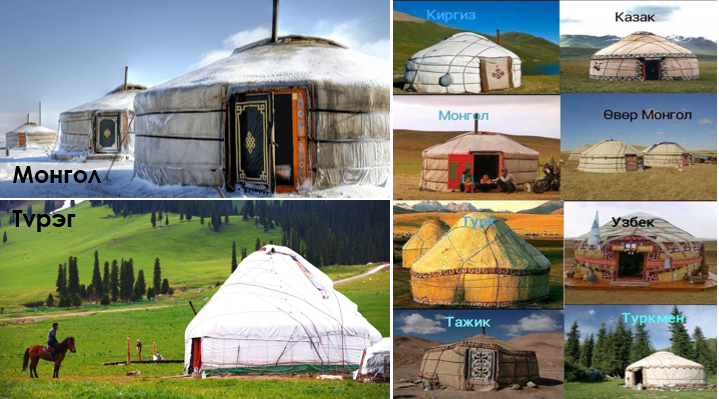
There are two forms of yurts that exist today. Although the principle of function is the same, it is possible to understand that this architecture has changed to different degrees due to the cultural differences of different tribal groups and due to the geographical environment. In the vast grasslands of Central Asia and Mongolia, the highland steppe areas have low and uneven rainfall, unstable water sources, and dramatic climate change, making the use of land resources particularly difficult due to climatic reasons.
现存至今的蒙古包有两种形式同时存在功能原理虽然一样,但是能够让我们理解到这种建筑由于不同的部落群体文化差异以及因地理环境等因素导致其发生了不同程度的变化。在广袤的草原上由于气候原因,中亚和蒙古的高原草原地带降雨量少而不均,水源不稳定,气候变化剧烈,土地资源利用尤为困难。
To survive in such a harsh natural environment, people have to use the already existing local resources “cattle and sheep” as a medium to transform resources, but the precipitation and pasture on this vast steppe cannot support long-term “grazing”, forcing herders to shift their pastures. However, the precipitation and pasture on this vast grassland cannot support long-term “grazing”, forcing herders to shift their pastures, so that “nomadic grazing” becomes a sustainable use of pasture. Horses, carts, and demountable houses (yurts) have become a necessity.
那么要在这样恶劣的自然环境中生存,人们就不得不利用本土已经存在的资源“牛羊”作为介质转化资源,然而这浩瀚无垠的草原上的降水量和草场无法支撑长期“驻牧”,迫使牧民转场,这样“游牧”就成为可持续利用草场的一种办法。以至于马、车、可拆卸房屋(蒙古包)随之成为必需品。
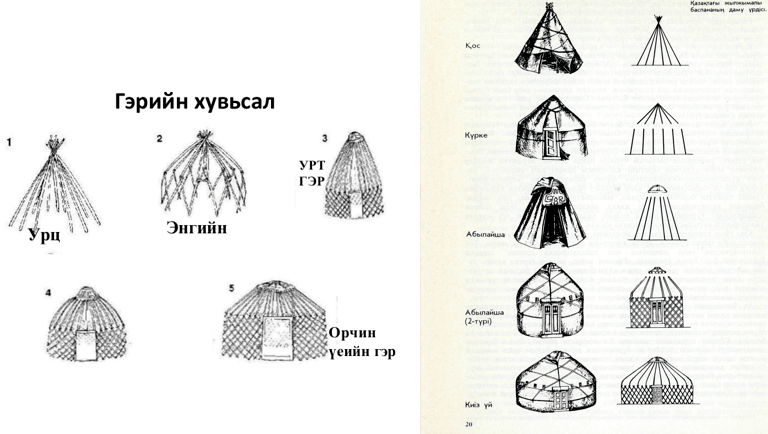
The evolution of yurt, in Siberia and northeast China, there is a kind of dwelling similar to the Navajo tent in southwest North America, which is called “Urts”, also known as “Xierenzhu” or “Shuroangku”. “, is a kind of conical “house” of hunting and nomadic people in the northeast of Oroqen, Ewenk, Hezhen, etc.
The word “pinch” is “tip” and “angku” is “shack”, which is the name of the Herzer people; The “sharpen” is “wooden pole”, “pillar” is “house”, which is the name of Oroqen and Ewenki people. And this kind of dwelling is the early УРЦ.
蒙古包的演变历程,在西伯利亚和中国东北部有一种类似于北美西南部纳瓦霍人的帐篷的这种民居叫“撮罗子”又称“斜仁柱”或“撮罗昂库”,是鄂伦春、鄂温克、赫哲等东北狩猎和游牧民族的一种圆锥形“房子”。“撮罗”是“尖”、“昂库”是“窝棚”,这是赫哲人的叫法;“斜仁”是“木杆”,“柱”是“屋子”,这是鄂伦春、鄂温克人的叫法。而这种民居就是早期的УРЦ。
The main feature of the “wooden pole with a spire house” is the “handful of roses”. Thus, the difference between hunting and nomadic herding gradually differentiated, УРЦ this primitive residential dwelling we can see even now, spread in East Siberia and some forests and steppes in northeastern China, and this wooden structure of the dwelling was later derived from the Buryat-style wooden house here we do not dwell on it.
“用木杆搭起的尖顶屋”,就是“撮罗子”最主要的特征。因而狩猎和游牧的差别逐渐分化,УРЦ这种原始的民居住宅我们甚至现在还能看到,遍布于东西伯利亚和中国东北部的一些森林草原中,而这种木结构的住宅后来又衍生出布里亚特式的木屋在此我们不过多的赘述。
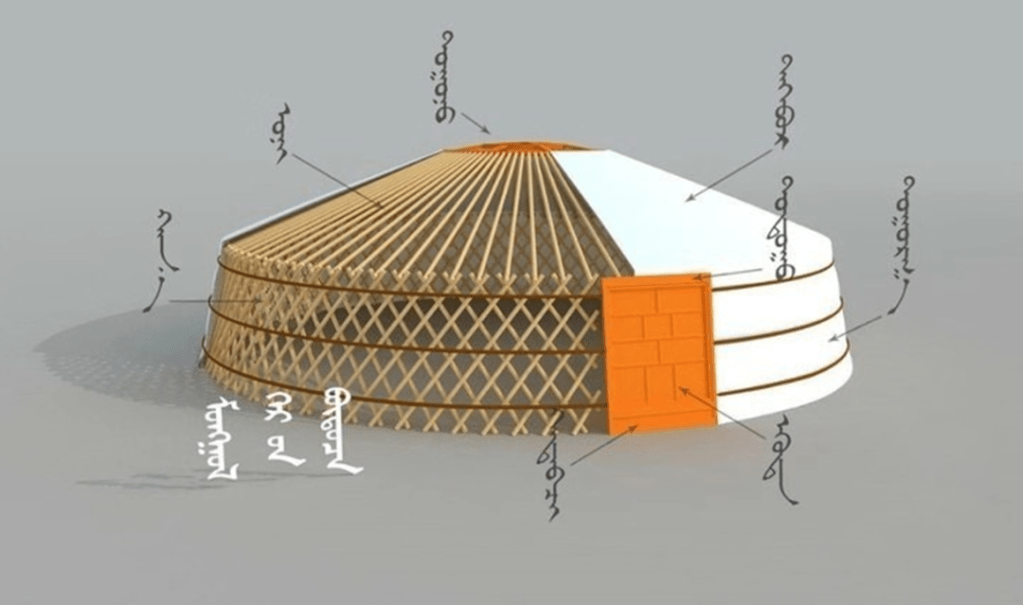

The yurt structure is very simple, mainly consists of five parts: door, skylight, mesh support, felt and ties, which are all building materials that can be easily found on the plateau, completely different from the way Han Chinese and other nationalities need bricks and tiles and other complicated professional burned products to select materials.
蒙古包结构非常简单,主要是由门,天窗,网状支架,毛毡和系绳这五部分组成,这都是在高原上可以方便找到的建筑材料,与汉族及其他民族所需要砖瓦等复杂的专业烧制品的选材方式完全不同。
Yurts are also very easy to assemble and dismantle, and are ready to be erected according to the local conditions and materials. Whether it is a historical palace mausoleum or an ordinary yurt inhabited by herdsmen, the basic structure is the same, although there are slight differences in scale and form.
蒙古包的组装和拆迁也非常方便,因地制宜,就地取材,随时准备搭建。无论是历史上的行宫陵寝还是牧民居住的普通蒙古包,虽然规模和形式上有些许差别,但基本的结构都是一样的。



Yurt composition diagram
When building a yurt, the herdsman first selects a place with suitable water and grass, draws a circle according to the size of the yurt, and sets up retractable mesh supports along this circle, turns the door of the yurt towards the east, and fixes the frame.
建造蒙古包时,牧民首先选一个水草适宜的地方,根据包的大小画一个圆形,并沿着这个圈将可以伸缩的网状支架树立起来,将包门朝东,并把架固定好。

In Mongolian language, a lattice support is called “Khana”. It is made by intertwining and securing multiple uniformly sized willow branches with ropes. It has a lightweight yet durable texture, is resistant to deformation, and does not easily crack. This makes it the most suitable type of wood for constructing the frame of a Mongolian yurt.
网状支架在蒙古语里叫作“哈那”,它由多根规格统一的红柳木条相互交叉并用系绳连接固定而成,质地轻而坚韧,不易走形,打眼不裂,是最适合蒙古包建造的框架木材。

Lattice walls (ХАНА) built of slats (or sticks) at an angle of αХАНА to each other (usually 90°, or less, unfold ХАНА to form walls with lattice spaces.
由板条(或木棍)建造的格子墙(ХАНА)彼此成αХАНА的角度(通常为90°,或者更小,展开ХАНА形成具有格子空间的墙面。
As shown in the figure, it is assumed that the roof bars УНЬ are located at the intersection of the top grid of ХАНА with a spacing w. There are n holes in all slats of ХАНА with the same number of holes in each slat and the same distance between the holes in the slats of wХАНА. ХАНА top intersection needs to have enough space for installation of УНЬ.
如图所示,假定屋顶杆УНЬ位于ХАНА的顶部网格交叉处,且间距为w。ХАНА的所有板条上有n个孔,每条板上的孔的数量相同,wХАНА条板孔距离也相同。ХАНА顶部交叉口需要有足够的空间来安装УНЬ。
The size of the yurt is determined by the number of “hana” as a skeleton and the height of the yurt varies with the degree of expansion and contraction of the “hana”. The size of the yurt is determined by the number of “hana” as the skeleton and the height varies with the degree of expansion and contraction of the “hana”. The variable diameter and width provide the yurt with adaptability in many climates.
蒙古包上覆盖物的重量最后都落在“哈那”上,所以其质量决定了蒙古包坚固与否,蒙古包的大小也由作为骨架的“哈那”的个数而定,高度则随着“哈那”的伸缩程度而变动。可变的直径和宽度,为蒙古包提供了多种气候中的适应性。
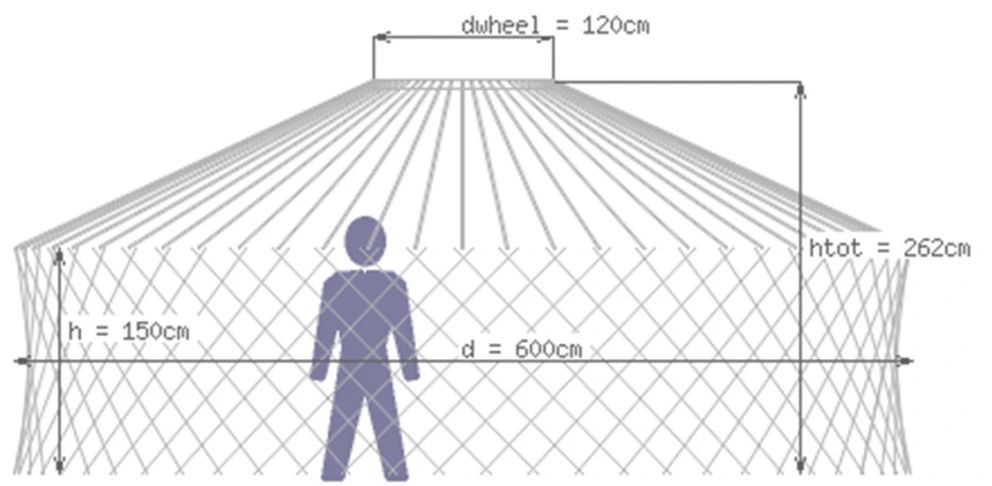
The height h is 140-180cm or even 200cm for general residential houses, and lower for smaller yurts (e.g. 3-4m), e.g. 6m usually 1.60 or larger. The height is so low because the final room is easier to heat, but for comfort reasons, there is an option to turn up the height of the Khana.
高度h一般民居为140-180cm,甚至200cm,较小的蒙古包(例如3-4m)较低,例如6m通常为1.60或更大。高度如此之低,因为最终的房间更容易加热,但是出于舒适的考虑,可以选择将哈娜的高度调高。

After fixing the supports, the skylight is erected and connected to the ХАНА with a wooden bar of uniform thickness and length. The skylight is a crucial part of the yurt, which is used for lighting and ventilation, and it is called “ТОНОО” in Mongolian language. The wooden frame for fixing the “ТОНОО” is called “УНЬ” in Mongolian, and the top end of the “УНЬ” is slightly sharpened and inserted into the pre-drilled hole in the “ТОНО”. “The other end is also punched and tied with “ХАНА”, so that these three parts become a tightly connected whole. The ropes are like the bloodline of the building, connecting all the fixed structures and playing an important role in the stability of the whole yurt. Here we have to make a comparison.
在固定好支架之后,则要立起天窗,并用一根根粗细长度统一的木条将天窗与ХАНА连接起来。天窗是蒙古包中至关重要的一个部分,用于蒙古包的采光和通风,蒙古语中称其为“ТОНОО”,蒙古人烧茶煮饭形成的袅袅炊烟也是从“ТОНОО”中穿过,升上天空的。而固定“ТОНОО”的木架在蒙古语中被称作“УНЬ”,固定时将“УНЬ”的上端略微削尖,插进事先打好窟窿的“ТОНОО”,另一端也要打孔串上系绳与“ХАНА”固定起来,使这三个部分成为一个紧密相连整体。绳子仿佛建筑物的血脉,串联所有固定结构,为整个蒙古包的稳定性起到了重要的作用。这里我们要做个对比。
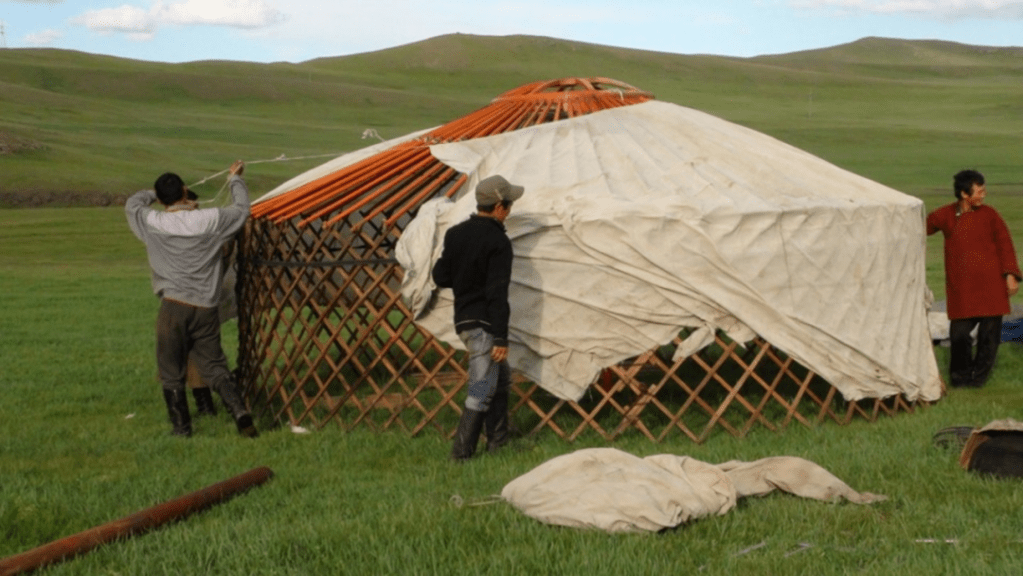
The next step is to place the felt. Felt is made of wool according to the shape and size of the frame, and is divided into four parts: the top felt, the cover felt, the perimeter felt and the floor felt. The top felt is placed first, and then the felt is placed around it, and then some large ropes are pressed and tied. On the ground there are two to three layers of ground felt. The square shaped felt is placed at the top of the yurt to cover the “ТОНОО”, the corners of which are connected to the “ХАНА” with ropes, which are lifted during the day to allow light and ventilation, and covered at night.
接下来的步骤就是置毛毡了。毛毡用羊毛按照包架的形状和大小制成,分为顶毡、盖毡、围毡和地毡四个部分。蒙古包先置顶毡,后放围毡,再用若干大绳压系。地上还有两至三层的地毡。盖毡则呈方形,置于蒙古包最顶端,用以盖住“ТОНОО”,其四角用绳固与“ХАНА”连接在一起,在白天掀起,以便采光和通气,晚上则盖上。
The top of the yurt is often decorated with a traditional Mongolian cloud pattern embroidered with blue cloth, while the top is decorated with auspicious lines or horns, and the surround is usually decorated with a back pattern.
蒙古包顶的盖毡常常绘有一种用蓝布刺绣绣制的蒙古族传统祥云图案,而顶毡多用吉祥线或犄角纹图样来装饰,围毡则一般用回纹图式装饰。
The door of the yurt is also an important part of the decoration. The door is usually drawn with symmetrical cloud patterns or longevity patterns, and some of them are hung with embroidered door curtains.
蒙古包的门也是一个重要的装饰部位,包门一般绘制对称的云纹或寿字纹样,有的还会挂上刺绣门帘。
After such labor, a yurt stands on the vast grassland, and then the owner will decorate this small house. For example, when it rains a lot in summer, the herdsmen will adjust the yurt slightly higher to increase the air permeability, and lower when it is windy to reduce the wind area.
如此劳动之后,一个蒙古包就站在了苍茫草原上,接下来主人就要对这座小房子进行装饰了。比如夏季多雨时,牧民会将蒙古包调整得略微高一些,增加透气性,刮大风时则要调低一些,减小受风面积。
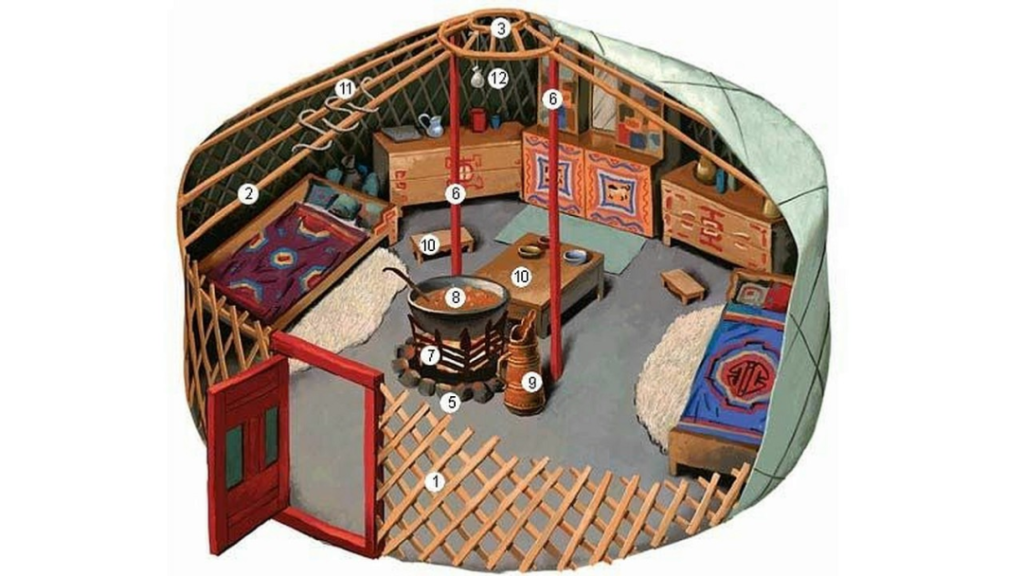


The yurt is a mobile home that accompanies Mongolian herders throughout their lives, so it can be called “small but complete”. In addition to the central fireplace, the yurt can also be furnished with cabinets and tables and chairs to support the fixed life of herding in the pasture. Generally speaking, the furnishings and location of the yurt are fixed.
蒙古包是伴随蒙古牧民一生的移动居所,因此可谓“麻雀虽小,五脏俱全”,除了中央必有的灶火,蒙古包中还能够摆设柜子与桌椅等家具,以支持在牧场固定放牧的生活。总的来说,蒙古包内的陈设和位置基本都是固定的。
Mongolians have a tradition of worshipping the god of fire. Mongolians see the fireplace as a symbol of the family business inherited from their ancestors, so it is placed at the heart of the yurt. The northwest corner of the yurt, opposite the yurt door, is dedicated to the worship of the god, and usually houses the Buddha box, the Buddha niche and the statue of Genghis Khan. The eastern half of the yurt is for men, where saddles, whips, hunting and wrestling clothes are placed, while the western half is for women, where rouge, headgear, food and cutlery are placed, and these placement habits are related to the division of labor between men and women.
蒙古人向来有祭奉火神的传统,蒙古人将火炉看作是祖先传承下来的家业的象征,所以将其置于蒙古包的核心位置。蒙古包的西北角,也就是与包门相对的位置是专门用于祭祀的神位,通常安放佛箱,佛龛和成吉思汗像。包里东半边是男人的席位,放置马鞍、马鞭、猎物与摔跤服等物品;而西半边是女人的席位,放置胭脂、头饰、饮食和餐具等物品,这些放置习惯跟男女劳动的分工有关。
It is not unreasonable that the yurt was designed in a round shape. Its round and soft shape not only reduces the resistance of wind and sand, but also maximizes the use of limited building materials to provide more living space.
蒙古包被设计成圆形是不无道理的,其圆润柔和的外形不仅能够减少风沙的阻力,而且还可以最大化地利用有限的建筑材料来提供更大的居住空间。

When it is cold in winter, you can thicken the felt on the roof and walls of the yurt to keep out the cold. The yurt has a threshold to prevent cold air and snow from accumulating. In the hot summer, you can open the top and the felt to dissipate the heat, so it is a good place to stay in the winter and the summer.
冬季严寒时,可以加厚蒙古包的包顶和包壁的毛毡,从而起到较好的御寒功效。蒙古包设有门槛,用于防止寒气侵入和大雪堆积。而炎炎夏季,则可以打开顶毡和围毡进行散热,由此来看,蒙古包可谓是“冬暖夏凉”的好住处了。
Only, the improvised yurts are less soundproof. But the sacrifice of privacy is not without reason. This is because in the steppe herders can rely on only themselves, and they must have insight into what is going on outside without going out. The poorer soundproofing made it easier for Mongolians not only to know the condition of their herds outside at night, but also to be more alert to the enemy in times of war and chaos. In ancient times, a family unit was also a fighting unit. Being ready for battle was also an important family lesson!
只是,临时搭建的蒙古包隔音较差。但牺牲隐私性也并非没有原因,这是因为在草原上牧民能依靠的只有自己,他们必须不出门就可以洞悉外面的情况。较差的隔音效果,使得蒙古人不仅在夜里更容易知晓外面畜群的状况,而且在兵荒马乱的时代可对敌情更加警觉。古代一个家庭单位也是一个战斗单位。随时应战也是重要的家庭教育!
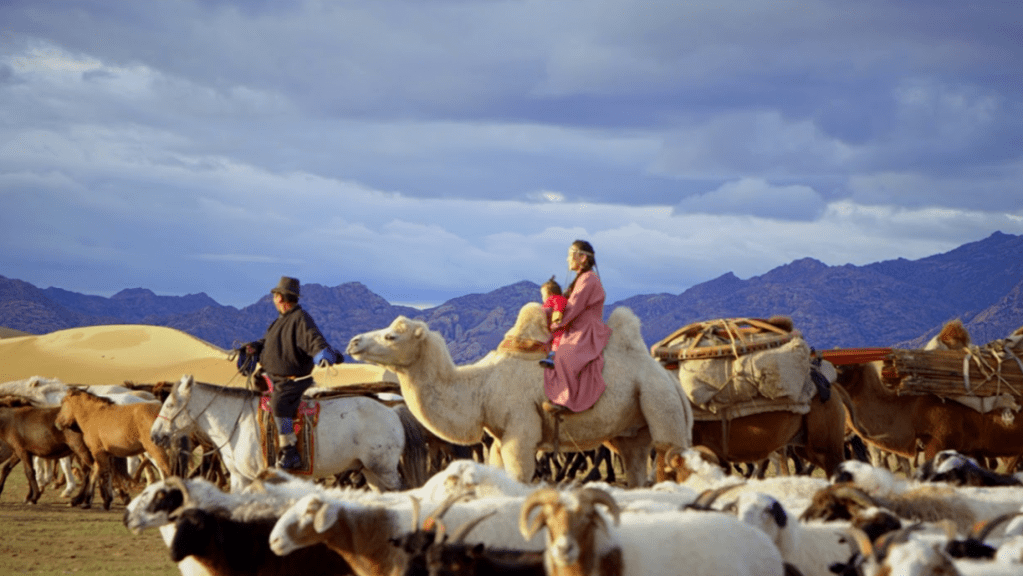
And when it comes time to relocate, people simply untie the individual camel ropes and the parts disintegrate. After two or three hours of folding and putting into place, the yurt disappears from the steppe and is transformed into parts that can be quickly transferred. At this time the “Хана” can be used as a board for a cattle car, and the other parts can be placed on top of the “Хана” and tied with ropes, so that only one cattle car can pull the whole yurt away, which is very convenient.
而到了搬迁时,人们只需解开各个驼绳,各个部位就会解体。经过两三个小时的折叠和归位,蒙古包就从草原上消失了,变成了可以快速转运的零件。此时“Хана”可作牛车的车板, 其他部分可放在“Хана”上方并用系绳捆牢,只需一辆牛车就可以将整个蒙古包拉走,十分便利。
The yurt on the steppe is as white as jade, often described by poets as a pearl sprinkled on the turquoise plains, which is related to the Mongolian people’s admiration for white color.
草原上的蒙古包洁白如玉,常常被诗人形容为洒在碧绿平原上的一颗珍珠,这与蒙古族崇尚白色有关,蒙古人“以白色为伊始”,因为雪白的羊群是蒙古族生活的主要依靠,而奶食品养育了世世代代的蒙古人,这都是白色带来的祥瑞。
Of course, like many ethnic buildings, living in a yurt requires adherence to Mongolian customs and taboos. The northwest side of the yurt is the seat of the elders. Neither the children of the family nor the guests are allowed to sit in the innermost seat, and the guests do not go to sit in the master’s seat unless after the master’s courtesy.
当然,和很多民族的建筑物一样,居住在蒙古包里也需要遵守蒙古族的习俗和禁忌。蒙古包内西北边是长辈之座,无论是自家的子女还是客人都不能坐在最里面的位置上,除非经过主人的礼让,否则客人不会去坐主人的位子。
Besides, guests are not allowed to enter the yurt with a horse whip, especially stepping on the threshold is regarded as a big taboo by Mongolians. After entering the door, you have to walk to your seat from the left hand side accompanied by the host, and when you leave, you have to follow the same route. The fire in the center of the yurt should not be touched with your feet.
除此之外,客人不能带着马鞭进入蒙古包,尤其踩门槛被蒙古人视作大忌。进门后要在主人的陪同下从左手边走向自己的座位,离开的时候也要按着原来的路线走。而蒙古包中央的灶火也不可用脚触碰。
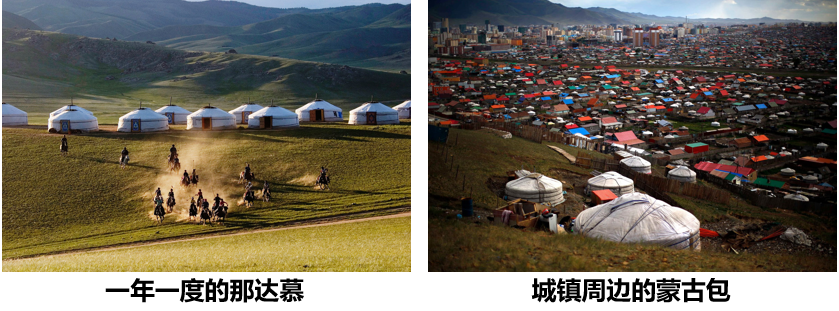
The sheep and cattle on the grassland are covered with fur and can live in the open air at any time, but it is difficult for humans to endure such living conditions. The yurt is the product of the nomadic life, which has been passed down and developed by many nomadic people in the highlands, and has become what we see today. The more difficult the conditions are, the more prominent the role of this kind of construction. Accordingly, the frequency of transhumance is higher and the scope is larger.
草原上的牛羊身被皮毛,可以随时露天而居,人类却很难忍受这样的居住条件。蒙古包就是适应逐水草而居的游牧生活的产物,在经历了众多高原游牧民族的传承和发扬之后,变成了今天我们看到的样子。而越是在条件恶劣的放牧地区,这种建筑的作用也越加凸显。相应的,转场的频率也更高,范围也更大了。
Mongolians in other countries are usually asked the question: Does your family live in a yurt?
蒙古人在他乡通常都会被问过一个问题:你家住在蒙古包里吗?
Of course getting that answer, maybe I should really show you~
当然获取这个答案,或许我真应该带你去看看~
Yurts have been on their way out of the lives of ordinary Mongolians since the late Qing Dynasty. While the large-scale migration urbanization accelerated, the traditional nomadic life received a huge impact, especially since the modern era, when the rural type settlement turned to urban type settlement, herders turned to settle from yurts into brick houses, and only a few herders could use yurts in summer when they walked the field.
蒙古包自晚清以来,就在逐渐退出普通蒙古人的生活。大规模的移民城市化加速的同时,传统的游牧生活受到了巨大的冲击,特别是现代以来,乡村型聚居转为城市型聚居,牧民转向定居从蒙古包搬进砖瓦房里,只有少数牧民在夏季走场时才能用到蒙古包。
Although the traditional yurt is gradually leaving the daily life of herdsmen, it has become active in the market of tourism. This new type of lodging is gradually blossoming on the grassland. However, as fewer and fewer people are using yurts, the true yurt technique is still being lost. Most of the Mongolian yurts found in tourist spots are made of low-cost steel, plastic and canvas, and have long since become a formality without the traditional yurt that carries the history and lifestyle of the people…
传统蒙古包虽然开始逐渐脱离了牧民的日常生活,可它却在旅游业的市场上活跃起来。这种新型民宿便逐渐绽放在草原上。虽然如此,但是由于使用蒙古包的人越来越少,真正的蒙古包技艺依然面临失传的窘境。旅游景点出现的那些彰显蒙古风情的蒙古包,大多是由成本低廉的钢筋,塑料和帆布制作的,早已不具有传统蒙古包承载民族历史和生活方式的作用俨然成为了一种形式……
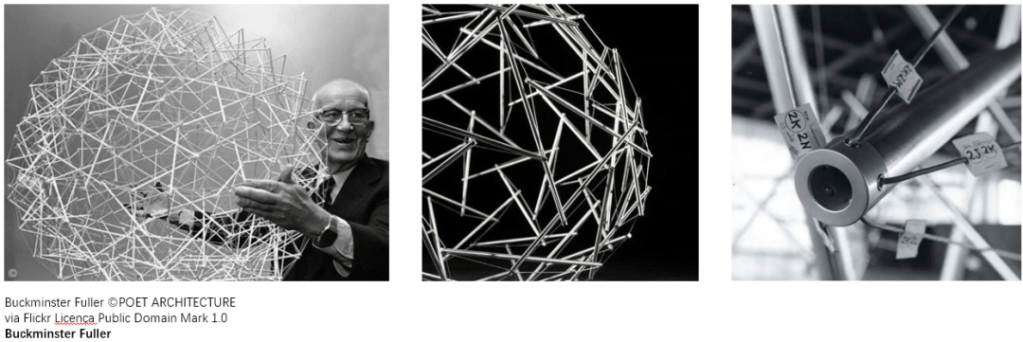
Although the traditional yurt is gradually declining, this form of architecture is still developing for architectural design, and even derives other forms different from the traditional one, and even more for the future ……
虽然说传统的蒙古包逐渐衰落,但是对于建筑设计而言这种形式的建筑还依然在发展,甚至衍生出来其他的不同于传统的形式,更甚至面向未来……
 ALTN VISION
Leave a comment