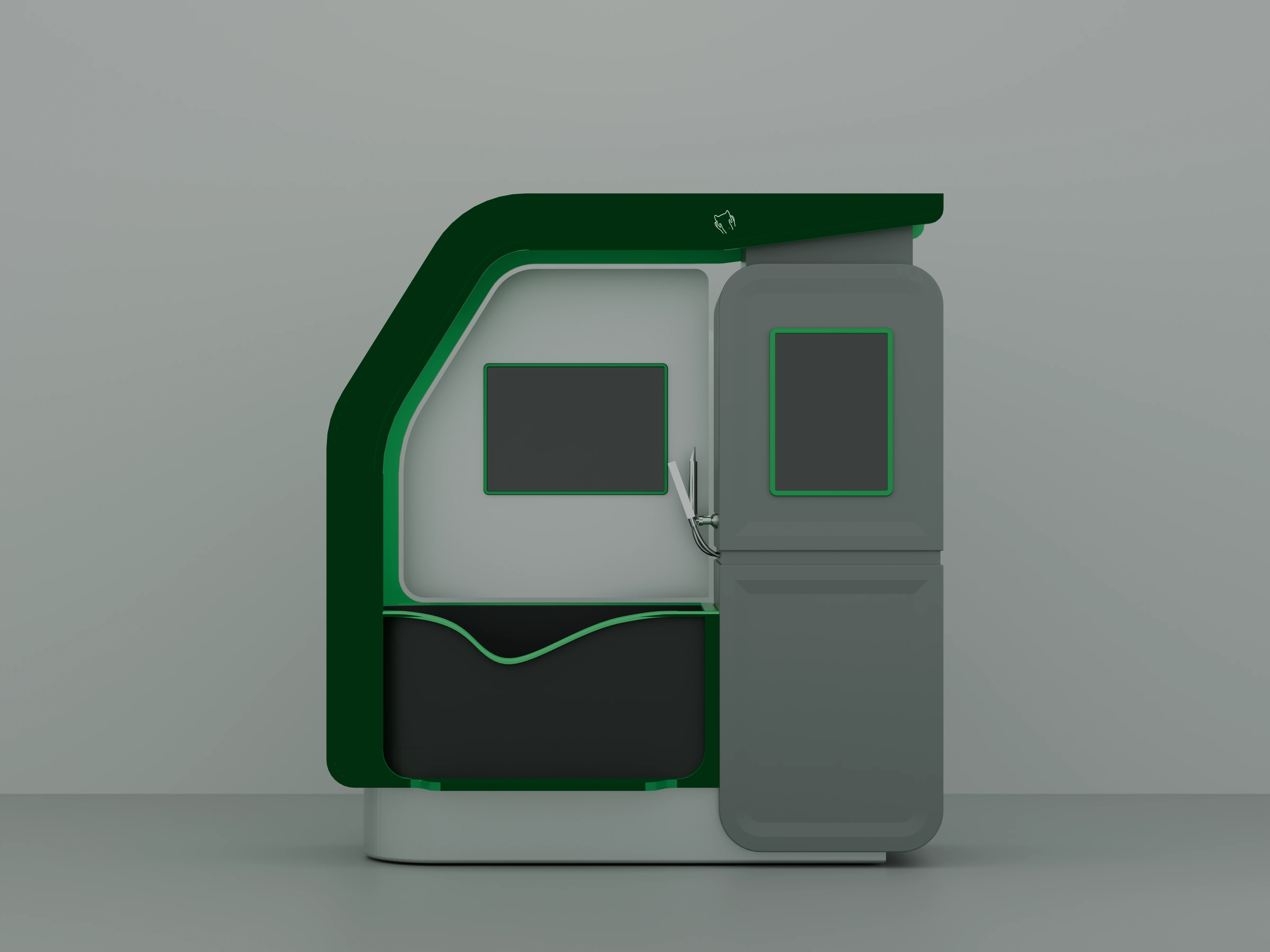
Comfort
A generous opening, rounded edges and a contained wash bay create a less clinical setting for the pet.
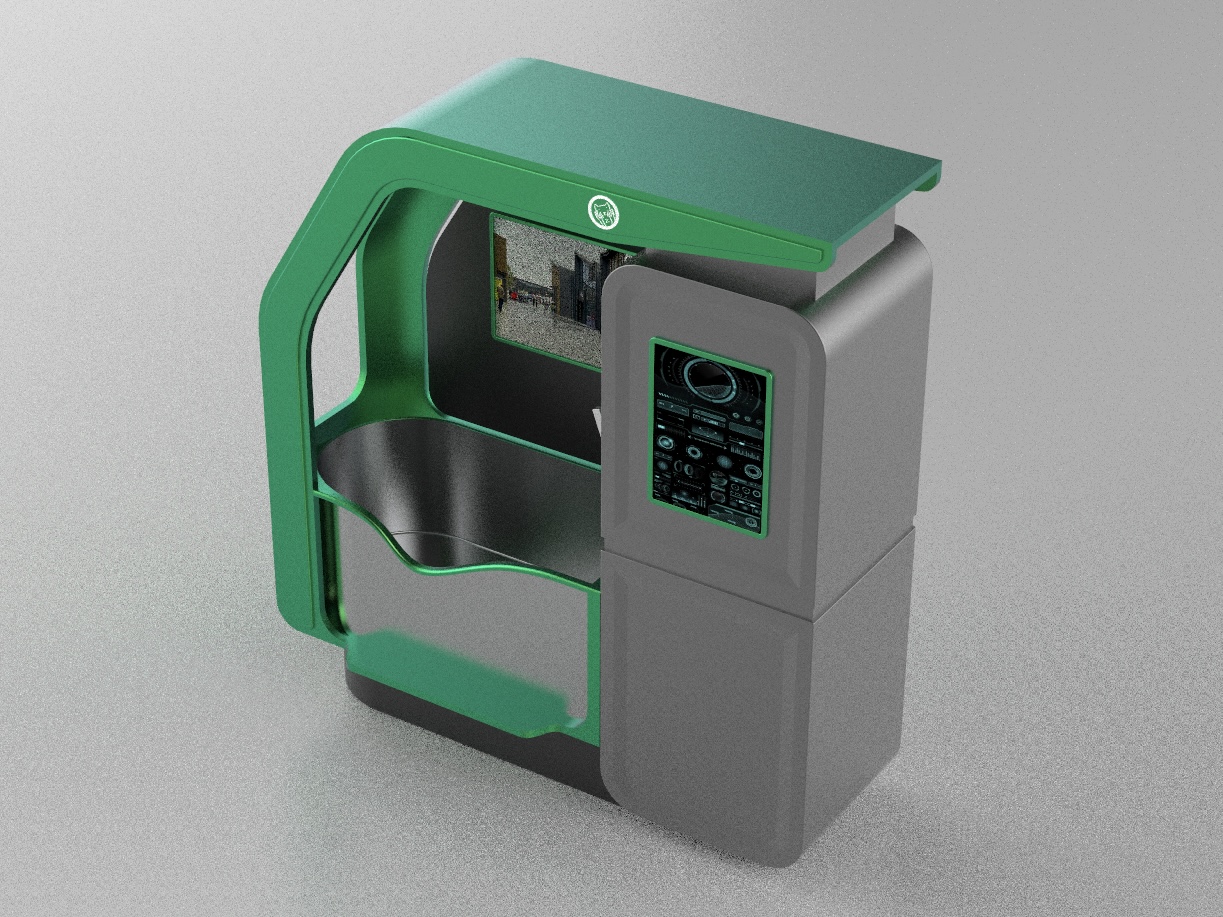
An integrated self-service pet bathing facility that connects mobile booking, authenticated check-in, digital controls and cleaning equipment in one service experience.
Commissioned by Shanghai Dawang Pet Department Store, this project explores a dedicated self-service bathing facility for a retail pet-care environment. As pets become integral family members, bathing equipment must respond to two users at once: the animal inside the wash bay and the owner managing water, cleaning and drying. Conventional improvised setups can create awkward posture, uncontrolled splashing and an unfamiliar environment for the pet.
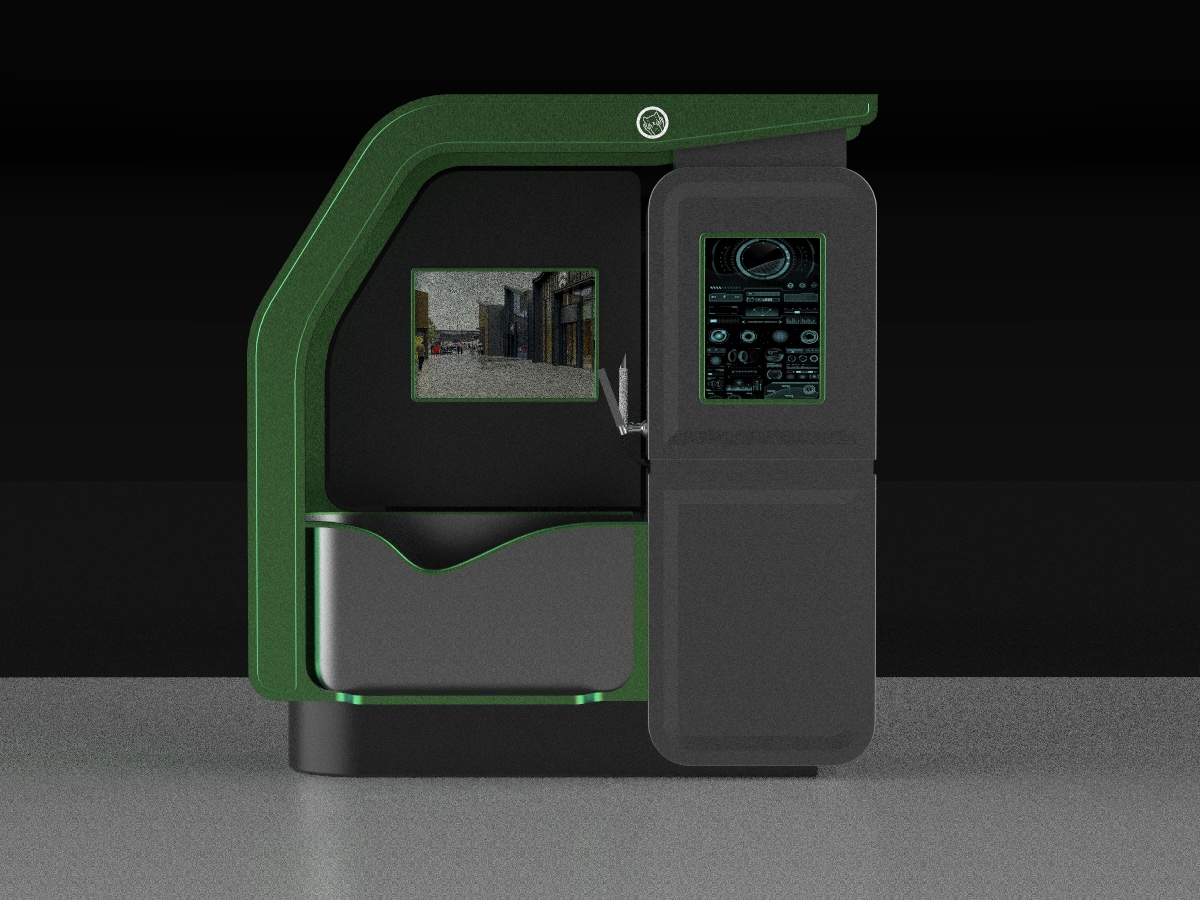
The proposal consolidates the complete bath cycle into one self-service station. A clearly defined bathing zone sits beside a dedicated service and payment tower, while the continuous outer frame gives the machine a recognizable, furniture-like presence rather than the character of exposed utility equipment.
A generous opening, rounded edges and a contained wash bay create a less clinical setting for the pet.
Separated wet and control zones, stable surfaces and softened corners support safer everyday handling.
Water, cleaning and drying controls are grouped in one vertical service module within easy reach.
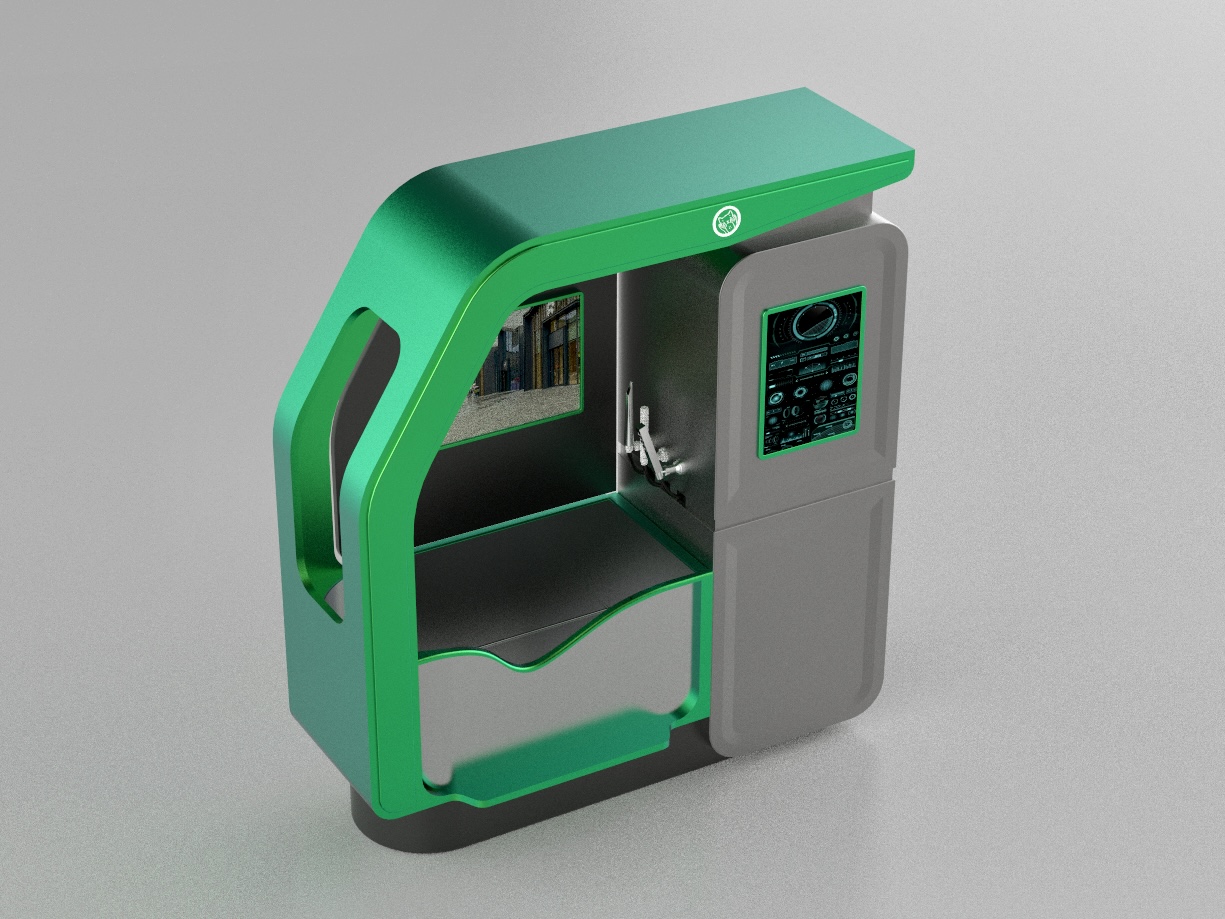
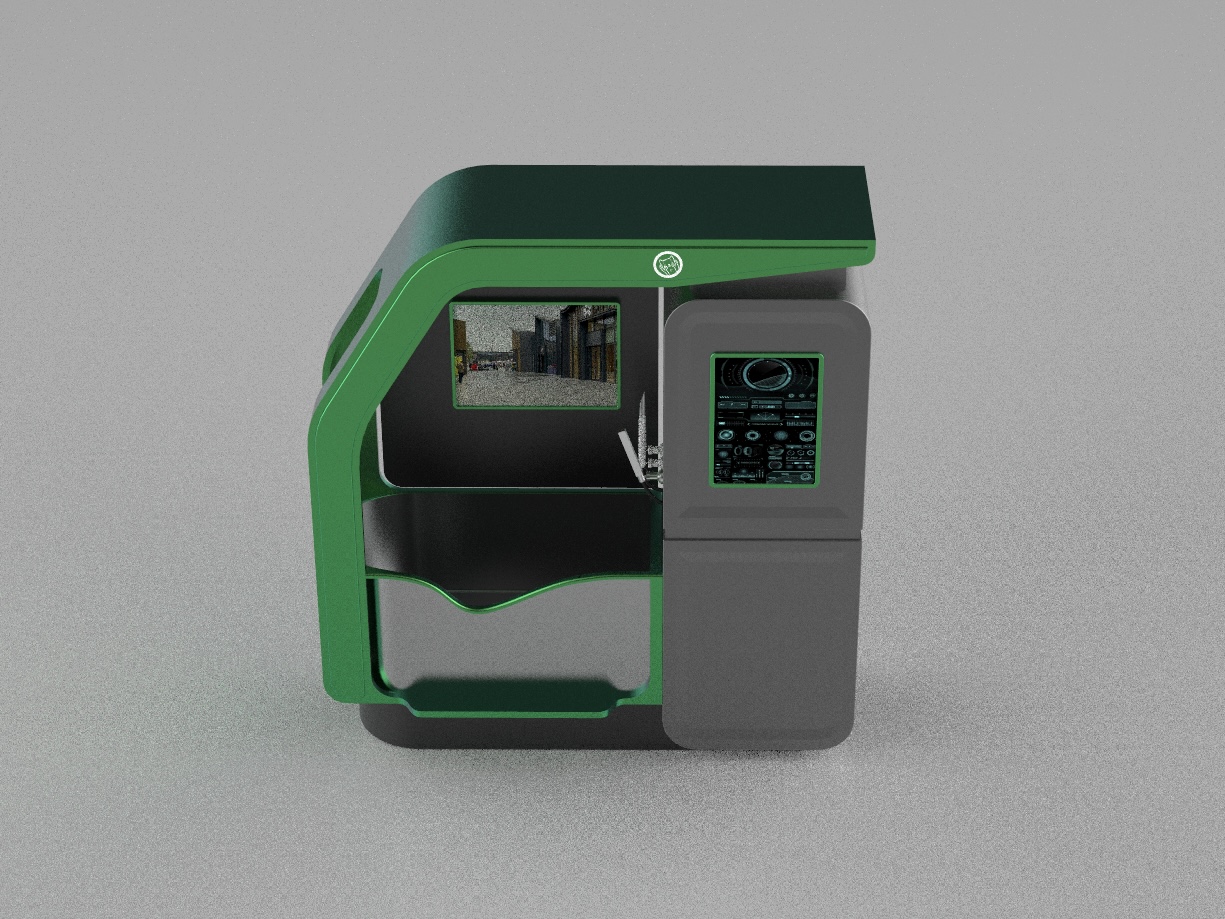 01020304
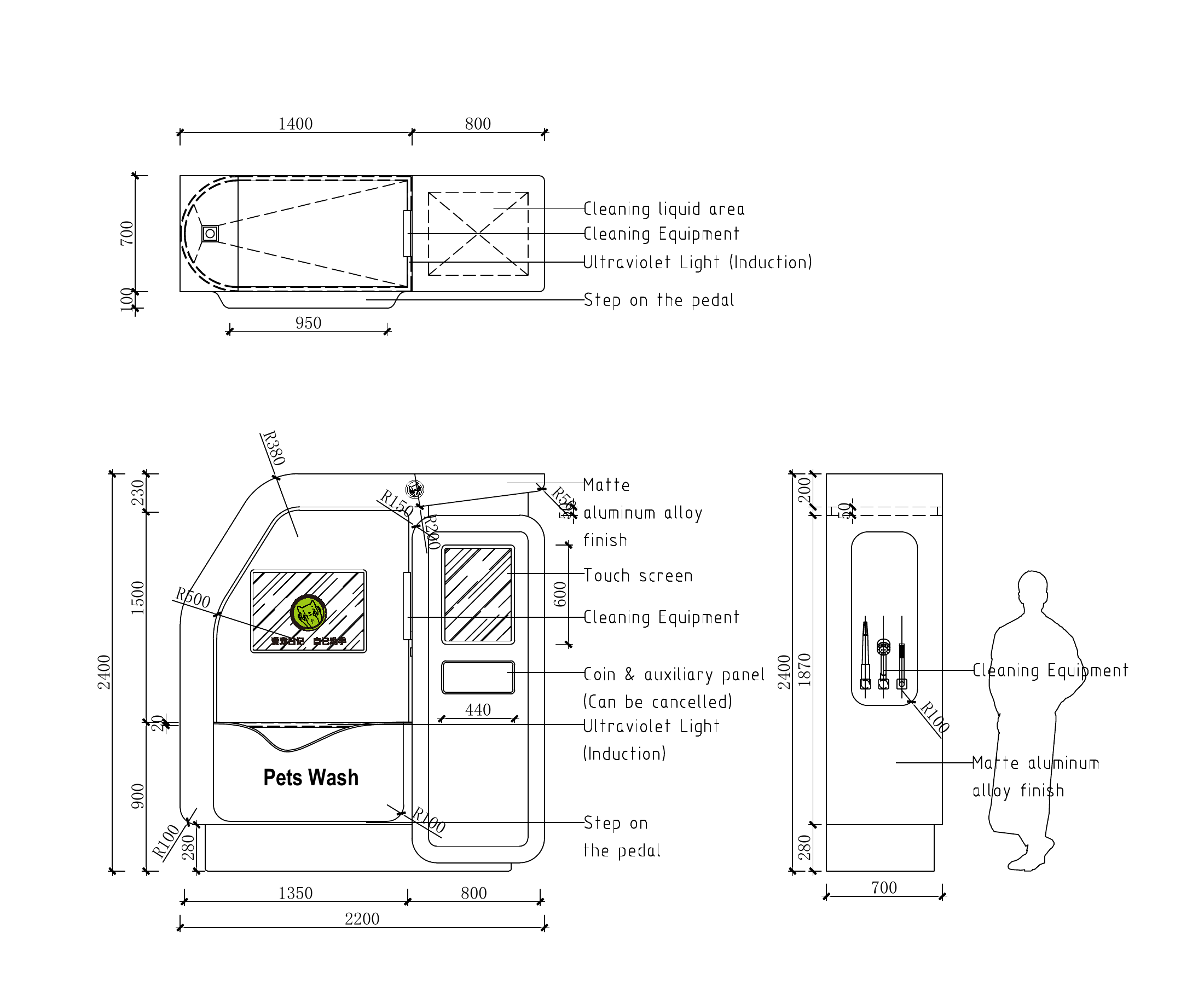
The updated drawing specifies a matte aluminum-alloy finish for the machine's outer enclosure.
The lower front platform is identified in the drawing as the pet-access pedal.
The standing-height display provides the primary self-service control interface.
The side-mounted hand tools are identified as cleaning equipment in the drawing.
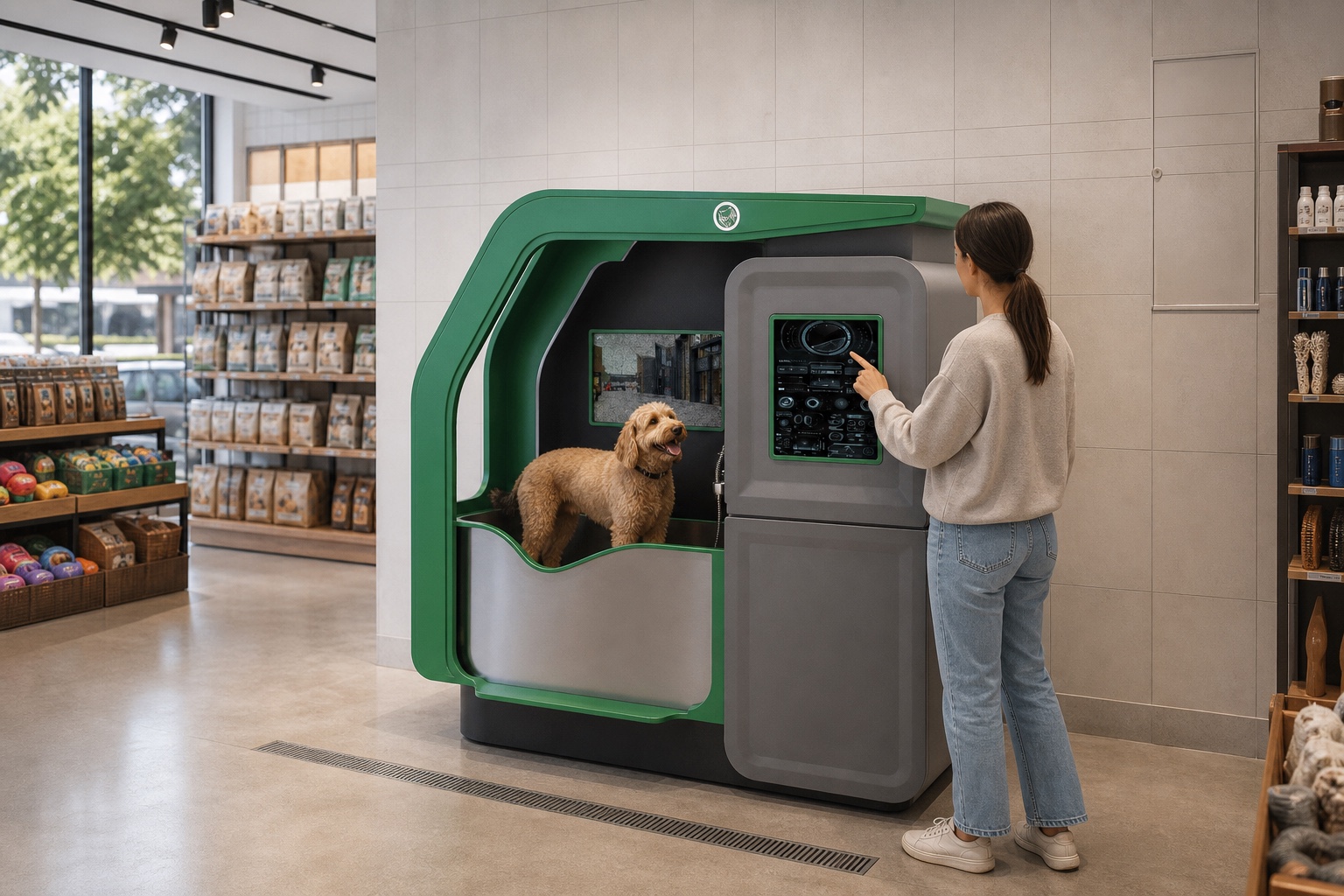
The environmental image visualizes retail presence and one possible circulation arrangement. It is AI-assisted and may vary from the CAD model in screen and enclosure details. Dimensional fit, operator clearance and installation requirements must be checked against the CAD model, a measured site and engineering documentation.
Start the session at the payment and auxiliary panel before the pet enters.
Adjust temperature and water flow from one interface.
Use the contained bay and hand nozzle for controlled care.
Run the basin cleaning cycle and clear the wet zone.
Finish with an adjustable drying stage from the same station.
The prototype demonstrates a continuous bilingual service across the customer’s phone and the machine display. A shared order carries availability, payment status, pet preferences and the machine credential from booking through completion. Both interfaces open in Simplified Chinese; use the in-product language control to switch to English.
订单号 DW-20231224-0188
支付即表示同意《自助洗护服务协议》与《隐私说明》

将动态码对准设备扫码区
动态凭证仅在预约时段内有效,请勿截图转发

当前距离预约开始超过 30 分钟,可免费取消。动态到店凭证将立即失效。
Book by distance, available time, pet profile and wash plan.
Pay through the selected platform and receive a time-limited arrival pass.
Pet details and service information appear only after order verification.
Follow the prompts for temperature, stages, timing, pause and emergency stop.
Sync the service record, receipt, refund status and next-care reminder.
WeUI structures the Mini Program while iOS safe areas, system regions and 44 pt touch targets remain protected.
WeChat Pay runs inside WeChat; Alipay uses its own Mini Program or an on-machine order QR. Both resolve to one order service.
A live release still requires merchant onboarding, order APIs, device integration, privacy review, accessibility checks and real-device testing.
The material direction separates the wet zone, structural base and service enclosure into maintainable finishes. Final slip resistance, ingress protection, cleaning chemistry and production detailing still require engineering validation.
The drawing specifies a frosted aluminium-alloy finish for the main equipment enclosure and outer form.
A dark, replaceable basin surface is proposed for grip, stain tolerance and straightforward maintenance.
The Rhino model separates the stainless-steel base as its own component layer for structural and service coordination.
The drawing locates a sensor-activated violet light strip along the transition between the wash and service zones.